3 questions about addiction and drug policy in 2026

Drug policy was largely a backburner issue in 2025. Despite the ambitions of some moderate or right-leaning activists, and an apparent passion for the issue from health secretary Robert F. Kennedy Jr., substance use and addiction issues have made few headlines in the past year.
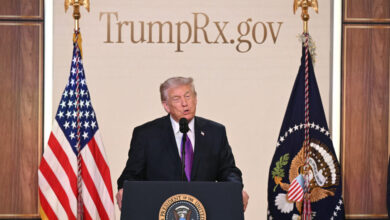
Early in the year, the Trump administration’s few actions on substance use consisted largely of layoffs at key agencies focused on addiction and mental health. In June, the White House broke its relative silence on drug-related issues with a hardline executive order on homelessness that threatened harm reduction organizations, namely those that offer supervised consumption.
Trump has also left empty a number of key posts, declining to appoint a leader for the Substance Abuse and Mental Health Services Administration and failing to usher the nomination of Sara Carter Bailey, the former Fox News journalist who is Trump’s pick for “drug czar,” through a Senate confirmation.
But things began heating up in 2025’s final months, as the Trump administration escalated its legally dubious strikes on boats allegedly smuggling drugs from Venezuela, Congress closed the “hemp loophole,” and Trump declared fentanyl a weapon of mass destruction.
Below, we preview the three key questions that could define a potentially busy year in the worlds of substance use and behavioral health.
What happens next for cannabis?
On the issue of marijuana, the Trump administration has its work cut out for it in 2026.
First is the long-running issue of reclassifying marijuana within the federal schedule of controlled substances, which Trump endorsed via an executive order on Dec. 18. Policy experts, lawmakers, and the fast-growing cannabis industry have long pushed for marijuana to be moved from Schedule I to Schedule III, moving it from a category that contains substances considered to have no medical use, like cocaine and LSD, to a category that contains prescription opioids and anxiety medications.
The Biden administration essentially left the task half-finished before leaving office, moving forward on a proposal in May 2024 that would have moved marijuana to Schedule III but beginning the process far too late for it to be finished before Inauguration Day.
The Trump administration faced a difficult tug-of-war between a booming cannabis sector and libertarian-leaning allies who want to see the drug rescheduled and opponents of rescheduling, who warn that doing so could turbocharge the industry, widen access, and threaten public health.
“A lot of people want to see it, the reclassification,” Trump told reporters on Dec. 15, “because it leads to tremendous amounts of research that can’t be done unless you reclassify, so we are looking at that very strongly.”
While the executive order makes the administration’s intentions clear, rescheduling a controlled substance still requires action from the Drug Enforcement Administration and the Department of Health and Human Services. It’s not clear how quickly those changes can be implemented, or if the regulatory process could create unforeseen roadblocks. Some experts are skeptical of the process altogether, arguing its impact will mostly consist of tax breaks for marijuana producers.
Separately, the Trump administration and Capitol Hill must chart a new path on the “hemp loophole,” which was intended to legalize nonintoxicating products containing the chemical CBD, many of which are used by people seeking alternative therapies for medical conditions ranging from pediatric epilepsy to chronic pain.
But in effect, the law has also allowed for the sale of intoxicating products containing versions of CBD, creating an industry of gummies, sodas, and other products now worth billions.
Lawmakers effectively closed the loophole in November, but left a one-year grace period after which many businesses could be forced to close. Now, Congress and the White House must decide how much THC to allow in hemp-derived products, and more broadly, how seriously to continue what is now effectively a charade: marijuana’s status as a drug illegal under federal law.
Will psychedelics see a breakthrough?
For years, advocates of psychedelic therapies have cast the drugs as potentially paradigm-shifting treatments for conditions like addiction, depression, and post-traumatic stress disorder.
But psychedelics like psilocybin are not without risk when used improperly, and they remain illegal under federal law and largely stigmatized in the public view.
Could 2026 be the year that things change?
The climate is certainly different: Kennedy has floated support for psychedelics, and the Trump administration even installed Rick Lambert, a doctor specializing in psychedelic-assisted therapy, to a high-level post at the Substance Abuse and Mental Health Services Administration.
Other psychedelic-adjacent drugs, like ketamine, have also gained acceptance in recent years, and in some cases have had versions approved by the Food and Drug Administration.
There’s also continued enthusiasm for derivatives of ibogaine, a hallucinogenic plant found in central Africa, as a potential therapy for conditions including opioid use disorder.
A bipartisan group of lawmakers recently introduced legislation that would allow some terminally ill patients or others with life-threatening conditions to pursue psychedelic therapy under “right to try” laws, underscoring the support for — or at least interest in — psychedelic therapies among both Republicans and Democrats.
Psychedelics still have a long road to travel before they’re regulated, manufactured, and able to be prescribed by average doctors to the general public. But it’s possible that 2026 could represent a major turning point.
Will opioid deaths continue their decline, or level off at pre-Covid levels?
The year-by-year graph of drug overdose deaths is starting to look less like a never-ending mountainside and more like a bell curve. After years of sharp increases, drug deaths started to level off in 2022 and have declined quickly in the years since.
Currently, Americans are dying of drug overdose at a rate of roughly 76,000 every 12 months. That’s far from the all-time high of over 111,000 in mid-2023, but it’s still the highest in U.S. history outside the Covid era.
Now, the question is whether the decline will continue — whether we’re simply witnessing the return to epidemic but non-Covid death rates, or the beginning of the end of the opioid crisis.
The shift comes in the wake of modest but meaningful policy changes from the Biden administration, including relaxed access to addiction medications and an added emphasis on harm reduction. Since taking power, the Trump administration has rolled back some of the federal government’s support for harm reduction programs but left in place the policy changes that widened access to two effective but long underused medications to control addiction, methadone and buprenorphine.
What’s more puzzling is that nobody can fully explain the sudden drop in deaths. Theories include shifts in the drug supply, increasingly cautious behavior from people who use dangerous substances, and the impact of recent public health efforts like expanded access to naloxone. Perhaps the most grim theory is a concept known in the statistics field as the “depletion of susceptibles” — the idea that many of the most vulnerable drug users have already died.
The next year will be telling for the trajectory of America’s drug crisis: is the downward trajectory a lasting and meaningful change, or will we continue to see roughly 75,000 overdose deaths each year, with no end in sight?
STAT’s coverage of chronic health issues is supported by a grant from Bloomberg Philanthropies. Our financial supporters are not involved in any decisions about our journalism.