3 Reasons Why del Toro’s Frankenstein Could be the Best Netflix Film Ever
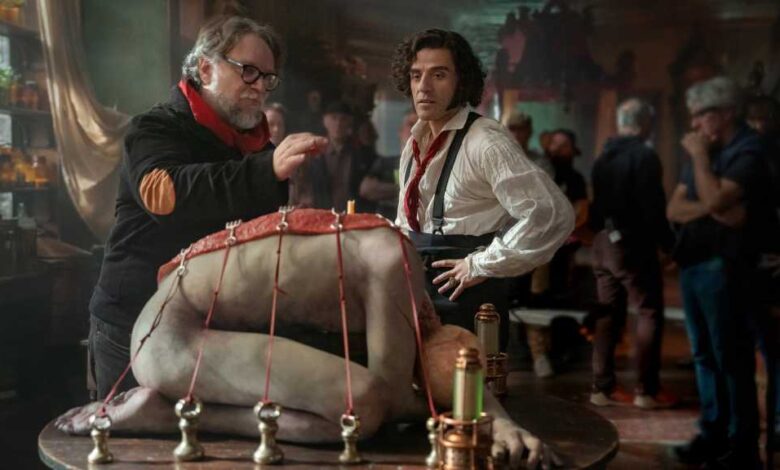
I want real props. I want actors to interact with tangible things, not with green screens and tennis balls on sticks. I want the audience to feel the weight of the world we’ve created, not just see a digital mirage.
This commitment to practical effects and traditional filmmaking techniques is evident in every aspect of Frankenstein. The sets were built to scale, with incredible attention to detail. The props were carefully crafted to look authentic. And the makeup used to transform Jacob Elordi into the monster was meticulously applied, creating a haunting and realistic creature.
Del Toro’s dedication to practical effects not only adds a sense of authenticity to the film, but also allows the actors to fully immerse themselves in their roles. Oscar Isaac and Jacob Elordi were able to interact with their surroundings and truly embody their characters, giving performances that are raw and emotional.
By eschewing CGI and AI in favor of practical effects, Guillermo del Toro has created a film that feels timeless and classic. It harkens back to the golden age of filmmaking, when movies were made with passion and dedication. And with Frankenstein, del Toro may have just created his magnum opus – a film that not only pays homage to the source material, but also pushes the boundaries of storytelling and filmmaking.
As the premiere of Frankenstein at the Venice Film Festival approaches, anticipation is high. Guillermo del Toro’s fresh interpretation of the classic tale, the powerhouse performances of Oscar Isaac and Jacob Elordi, and the commitment to practical effects all point to a film that could be a game-changer for Netflix – and a masterpiece in its own right.
Craftsmanship in Filmmaking: A Return to Old-School Techniques
In a world dominated by digital technology and artificial intelligence, there is a growing appreciation for old-fashioned craftsmanship in the film industry. Director Guillermo del Toro is a staunch advocate for traditional methods of production, eschewing CGI and simulations in favor of handcrafted sets and props.
Del Toro’s dedication to craftsmanship is evident in his latest project, “Frankenstein.” Rather than relying on digital effects, he insists on painting, building, hammering, and plastering everything by hand. He personally supervises the construction of the sets and even paints props himself. The result is an operatic beauty that can only be achieved through meticulous attention to detail and a hands-on approach.
One of the most striking aspects of del Toro’s approach is his insistence on constructing elaborate sets that rival the grandeur of classic Hollywood productions. For “Frankenstein,” he spared no expense in creating a set that transports viewers back in time to the era of the original novel. The attention to detail is so meticulous that it has been compared to the work of a mad scientist like Victor Frankenstein himself, carefully selecting and merging dead elements to bring his creation to life.
Despite the time and effort invested in building these sets, “Frankenstein” will have a limited theatrical run before premiering on Netflix. This decision highlights the challenges faced by filmmakers who prioritize craftsmanship in an industry that values speed and cost-efficiency. While most viewers will ultimately experience the film on a small screen, the magic of del Toro’s handcrafted sets will undoubtedly shine through.
Netflix’s CEO, Ted Sarandos, has acknowledged the shift away from traditional theatrical releases, emphasizing the need to adapt to changing audience preferences. While the concept of a film playing in theaters for months on end may be outdated, there is still a place for the artistry and craftsmanship that del Toro brings to his projects.
In a world where CGI and AI reign supreme, Guillermo del Toro’s commitment to old-fashioned craftsmanship serves as a reminder of the beauty and magic that can be created by human hands. “Frankenstein” is not just a film; it is a testament to the enduring power of traditional filmmaking techniques in an increasingly digital world.