7th Day Of NYC Nurses Strike Highlights Ongoing Healthcare Problems
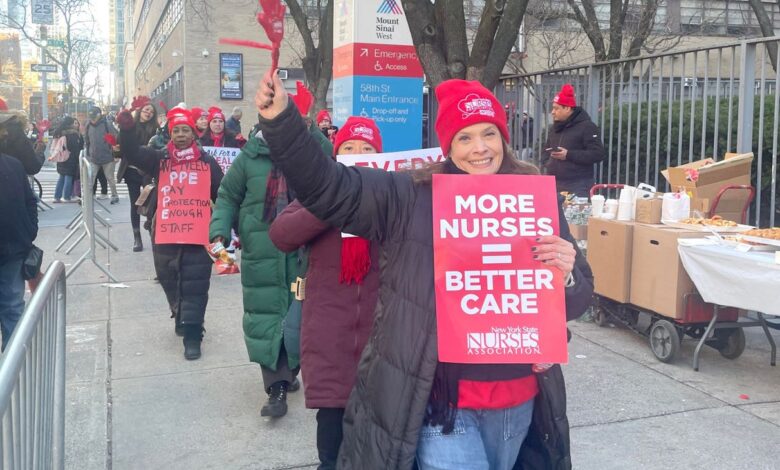
The ongoing nurses strike at Mount Sinai West in New York City has entered its seventh day, highlighting the unsafe working conditions and chronic understaffing that nurses face. With no resolution in sight, the strike serves as a stark reminder of the broken state of the U.S. healthcare system.
The strike, which began on January 12, involves around 15,000 nurses from hospitals within the Mount Sinai, Montefiore, and NewYork-Presbyterian systems. The New York State Nurses Association, representing the nurses, is pushing for pay increases and improved safety measures. Negotiations have been ongoing, with a federal mediator recently joining the discussions. However, progress has been slow, with both sides failing to reach an agreement.
In addition to the nurses strike in NYC, over 31,000 nurses and healthcare professionals at Kaiser Permanente in California and Hawaii have also announced plans to strike on January 26. The union representing these healthcare workers has cited understaffing and increasing workloads as key issues, pointing out the disparity between executive salaries and frontline healthcare worker wages.
These strikes come amidst a broader issue of healthcare worker burnout in the U.S. A recent report by the U.S. Surgeon General highlighted the crisis levels of burnout among nurses, physicians, and other healthcare professionals even before the COVID-19 pandemic. The report identified various factors contributing to burnout, including excessive workloads, lack of support, and unrealistic expectations.
The widening pay gap between healthcare executives and frontline healthcare workers has also been a point of contention. Executives at healthcare systems like Mount Sinai, Montefiore, and NewYork-Presbyterian earn significantly higher salaries than nurses and other healthcare professionals, leading to calls for more equitable compensation.
The COVID-19 pandemic further exposed the flaws in the U.S. healthcare system, with shortages of essential supplies and inadequate staffing levels hampering the response to the crisis. Healthcare professionals worked tirelessly to care for patients, often without proper compensation or support.
As nurses and healthcare professionals continue to strike for better working conditions and fair compensation, the need for systemic change in the healthcare industry becomes increasingly apparent. Addressing the root causes of burnout, improving staffing levels, and bridging the pay gap between executives and frontline workers are essential steps towards building a more sustainable and equitable healthcare system.