Stocks slump as inflation, AI worries rattle investors

Stocks took a hit on Friday as investors reacted to higher-than-expected inflation data and growing concerns about the impact of artificial intelligence on the economy. The S&P 500 dropped 0.4% to close at 6,879, while the Dow Jones Industrial Average fell by 1.1%, losing 521 points. The Nasdaq Composite, which is heavily weighted towards technology stocks, also slid by 0.9% on the day.
The market losses were triggered by the release of the Producer Price Index, which measures price changes at the wholesale level before they reach consumers. In January, inflation surged by 2.9% on an annualized basis, far exceeding economists’ expectations of 1.6%. This unexpected spike in inflation may prompt the Federal Reserve to delay any potential interest rate cuts, according to experts.
In addition to inflation concerns, tensions between the United States and Iran over a potential nuclear deal also contributed to market jitters. President Trump’s threat to attack Iran if it does not comply with nuclear restrictions led to a rise in oil prices. The price of benchmark U.S. crude climbed by 2.8% to $67.02 per barrel, while Brent crude, the international standard, increased by 2.4% to $72.48 per barrel.
Furthermore, fears surrounding the disruptive impact of artificial intelligence continued to shake Wall Street. Investors were selling off stocks of software companies that could potentially be replaced by AI-powered competitors. Companies like Block, the parent company of Cash App and Square, announced significant workforce reductions, with CEO Jack Dorsey attributing the layoffs to the efficiency brought about by AI tools.
The trend of companies turning to AI and cutting jobs has been on the rise, with Pinterest and Dow also citing AI as a factor in recent layoffs. The fear that AI could not only replace human workers but entire companies has led to swift sell-offs in stocks perceived to be at risk of AI disruption across various industries.
Despite the AI-related concerns, some companies managed to thrive on Wall Street. Netflix saw a 13.8% increase in its stock price after withdrawing its bid to acquire Warner Bros. Discovery’s studio and streaming business. This decision paved the way for a deal with Paramount Skydance, who raised their bid to $31 per share, causing their shares to surge by 20.8%.
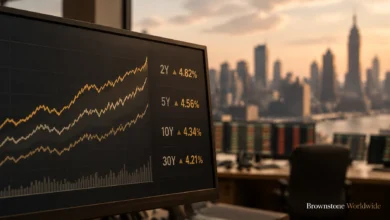
In the bond market, the yield on the 10-year Treasury briefly rose following the inflation report but ultimately settled at 3.96%. This movement in Treasury yields is often an indicator of investor sentiment, with lower yields suggesting a flight to safer investments during times of uncertainty.
Despite the challenges posed by inflation and AI-related disruptions, the market continues to navigate through these obstacles, with some companies finding opportunities for growth amidst the turbulence.