Don’t Let The Room Intimidate Your Assignment
I woke up this morning at 5:00 AM, long before the sun had even thought about touching the skyline here in Atlanta. The hotel room was dead quiet, save for the hum of the AC and the sound of me clicking my laptop shut. I grabbed my badge: the one with the heavy lanyard and the "VIP" or "Speaker" or "Elite" tag that we all pretend doesn't matter, but secretly, we know it does: and I headed down to the lobby.
As the elevator doors slid open, I was hit with that unmistakable TSP Live energy.
If you’ve never been in a room like this, let me paint the picture for you. It’s a sea of high-level entrepreneurs. It’s the smell of expensive coffee and even more expensive ambition. You’ve got people in the corner talking about seven-figure launches like they’re discussing the weather. You’ve got logos on shirts that represent years of grit, and you’ve got eyes that look like they’ve seen the fire and come out on the other side.
It’s intoxicating. It’s inspiring.
And if you aren’t careful, it is absolutely terrifying.
I watched a young sister standing near the registration desk. She looked sharp: outfit on point, notebook tucked under her arm: but she was doing that thing. You know the thing. The "I’m looking at my phone so I don’t have to look at the giants in the room" thing. She was shrinking. You could see it in her shoulders. She was comparing her "just getting started" to someone else’s "decade of dominance."
In that moment, I realized something that every leader needs to hear before they step into a high-stakes environment: The room is a resource, but it is not your master.
You didn’t pay for the flight, the hotel, and the ticket to become a spectator of someone else’s success. You came here because you have an assignment. And the second you let the atmosphere intimidate you, you’ve already forfeited the ROI on your investment.
The Ego of the "Imposter"
Let’s get real for a second. We call it "Imposter Syndrome" because it sounds professional. We treat it like a clinical condition that just happens to us. But if I’m being witty and a little bit authoritative with you this morning, let’s call it what it actually is: Ego in reverse.
When you walk into a room of heavy hitters and feel like you don’t belong, you are making the entire room about you. You are obsessing over how you look, how you sound, and whether or not you are "enough."
You are so focused on yourself that you’ve completely forgotten the people you were sent to serve.
Your business isn't about you. Your brand isn't about you. Your assignment: the reason you were called into this industry: is about the problem you solve and the people who are currently suffering because they haven't found you yet.
When you let a "big room" intimidate you, you aren't being humble. You’re being selfish. You are keeping your gifts, your insights, and your solutions locked away because you’re afraid the "big dogs" might realize you’re still learning.
Newsflash: The big dogs are still learning, too. They just stopped apologizing for it three years ago.
Atmosphere vs. Assignment
There is a massive difference between the atmosphere of a room and the assignment you have within it.
The atmosphere is the vibe. It’s the music, the lights, the high-energy speakers, and the social proof dripping off the walls. The atmosphere is designed to move you. It’s designed to wake you up. But the atmosphere cannot do the work for you.
Your assignment is the specific set of tasks, connections, and realizations that only you can execute.
Maybe your assignment at TSP Live isn't to be the loudest person in the room. Maybe your assignment is to find the one person in the breakout session who has the missing piece to your supply chain. Maybe your assignment is to finally admit that your current systems are trash and you need to hire help.
When you focus on the assignment, the intimidation fades. Why? Because you’re on a mission. A soldier on a battlefield doesn't get intimidated by the size of the mountain; he’s too busy looking for the objective.
If you find yourself shrinking, it’s because you’ve lost sight of your objective. You’ve traded your mission for a mirror.
The Grounding Practice: The Three-Question Anchor
I want to give you a practical leadership move you can use the next time you feel the room closing in on you. I call it the Three-Question Anchor. You can do this in the bathroom stall, in the back of the auditorium, or while you’re waiting in line for your lukewarm catering.
Stop. Breathe. Ask yourself these three things:
- Who is waiting for me to get this right? (Visualize your clients, your family, your future team).
- What is the one "receipt" I need to take home from this session? (Not a quote, but a strategy).
- Am I a tourist or a builder today?
Tourists take pictures of the scenery and talk about how nice everything looks. Builders look at the foundation, the materials, and the blueprints because they intend to go home and construct something of their own.
Tourists are intimidated by the grandeur. Builders are energized by the possibility.
The Room is a Resource, Not a Reason to Shrink
The people in that room: the ones you’re afraid to talk to: are just resources with heartbeats.
That 8-figure founder? They aren't a god. They are a case study. They are proof that the thing you’re trying to do is actually possible. They are a walking, talking blueprint.
When you shrink, you lose the ability to ask the right questions. You lose the ability to see the room for what it actually is: a giant library of experience that you have a temporary membership card for.
If you are sitting in a seat at a conference, at a board table, or in a high-level mastermind, you are there because you earned the right to be in the room. The check cleared. The invitation was sent. The door was opened.
God doesn't make mistakes with seating charts.
If you are in the room, you are supposed to be in the room. Period. Now, stop looking at the chandelier and start looking for the tools.
Move on Purpose
As you head into your day, I want you to walk with a different kind of weight. Not the weight of insecurity, but the weight of intentionality.
Don’t just sit there and take "pretty notes" (we’ll talk about that tomorrow). Sit there and find your assignment. Find the one move, the one person, or the one shift that will change the trajectory of your Q3 and Q4.
The room is big. The players are heavy. The stakes are high.
Good. That’s exactly where you belong.
Get clear. Move on purpose. And for heaven’s sake, stop looking at your phone when the giants are talking. You’re one of them.
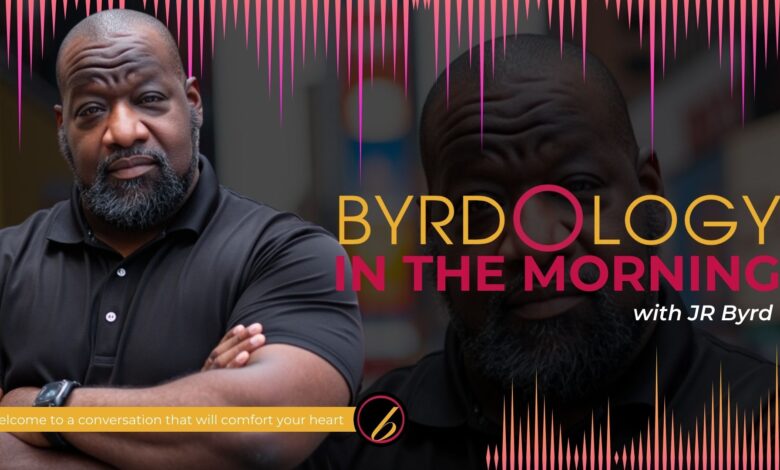
*J. Richard Byrd \ www.jrichardbyrd.com \ is a business development mentor, media strategist, and CEO of The ByrdOlogy Group. ByrdOlogy In the Morning is a 4-minute daily leadership devotional available on YouTube, Spotify, and all major podcast platforms. \ www.BLKHustle.com/byrdologyinthemorning *
{“@type”:”BlogPosting”,”image”:”https://cdn.marblism.com/w178xT3iV6q.webp”,”author”:{“url”:”https://www.jrichardbyrd.com”,”name”:”J. Richard Byrd”,”@type”:”Person”},”@context”:”https://schema.org”,”headline”:”Don’t Let The Room Intimidate Your Assignment”,”publisher”:{“logo”:{“url”:”https://cdn.marblism.com/w178xT3iV6q.webp”,”@type”:”ImageObject”},”name”:”ByrdOlogy in The Morning”,”@type”:”Organization”},”description”:”A daily leadership devotional on overcoming imposter syndrome in high-stakes environments like TSP Live. Learn how to recenter on your assignment and use the room as a resource.”,”datePublished”:”2026-06-13″}