A Doctor Fact Checks Sen. Rand Paul’s Comments About Vaccines
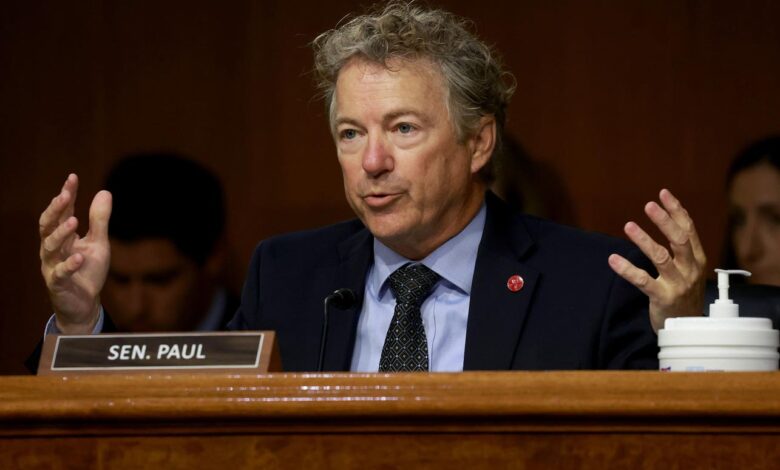
In Senate Hearing, Sen. Rand Paul Clashes with Ex-CDC Director Over Public Health Issues
WASHINGTON, DC – JUNE 16: Sen. Rand Paul (R-KY) speaks during the COVID Federal Response Hearing on Capitol Hill on June 16, 2022 in Washington, DC. (Photo by Joe Raedle/Getty Images)
Getty Images
In a heated Senate committee hearing, Senator Rand Paul engaged in a contentious exchange with former CDC director Dr. Susan Monarez on various public health issues, such as COVID-19 vaccinations, the administration of hepatitis B vaccines in children, and her association with Health and Human Services Secretary Robert F. Kennedy Jr.
During the discussion on COVID-19 vaccinations, Senator Paul challenged Monarez by asking, “does the COVID vaccine reduce hospitalizations for children under 18?” Despite Monarez’s response that it can, the senator asserted, “it doesn’t.”
Contrary to Senator Paul’s claim, a study published in the journal JAMA Pediatrics in 2023 revealed that COVID-19 vaccination was linked to decreased risks of infection, hospitalizations, and multisystem inflammatory disease in children aged 5 to 11. Vaccinated children were found to be 68% less likely to be hospitalized compared to unvaccinated children.
Senator Paul also raised concerns about the administration of the hepatitis B vaccine, stating that there is no scientific basis for giving newborns the vaccine when the mother tests negative for hepatitis B. However, universal vaccination against hepatitis B for newborns has been recommended as a preventive measure against the disease, which can be transmitted through various means such as sexual contact or sharing contaminated items.
Historically, universal vaccination against hepatitis B has proven to be effective in significantly reducing the prevalence of the disease. Prior to universal vaccination, cases of hepatitis B remained high, but after its implementation, there was a substantial decline in the number of infections. Vaccination has played a crucial role in preventing the spread of hepatitis B and protecting individuals from its severe consequences.
Despite being a physician himself, Senator Paul’s statements lack scientific evidence and could potentially undermine public confidence in vaccines and public health officials. As a prominent figure in politics and social media, his misinformation may have far-reaching implications for public health.
It is imperative to hold politicians accountable for spreading misinformation, especially when it pertains to public health issues that impact the well-being of millions of individuals. Ensuring accurate and evidence-based information is essential in promoting public health and combating the spread of misinformation.