A Maryland resident is diagnosed with screwworm. Here’s what to know about the flesh-eating parasite.
A recent case of New World screwworm has been reported in a Maryland resident who traveled to El Salvador. This is the first reported case in the United States tied to travel to a country with a current outbreak. The Centers for Disease Control and Prevention (CDC) confirmed the diagnosis on August 4th, with federal health officials acknowledging the infection in a statement on Monday. Fortunately, the individual has since recovered, and there have been no reports of transmission to other people or animals, according to Maryland health officials. The CDC conducted an investigation into the case in conjunction with Maryland’s health department.
New World screwworm, also known as NWS, is a fly that lays its eggs in open wounds and body openings. This parasite is typically found in South America and the Caribbean and is rare in humans. However, it has been a concern for ranchers as cattle infestations have been moving northward through Central America and Mexico. The CDC is collaborating with the U.S. Agriculture Department to prevent further spread of the pest. While the United States largely eradicated the screwworm in the 1960s and 1970s, the recent case in Maryland indicates a resurgence of the parasite.
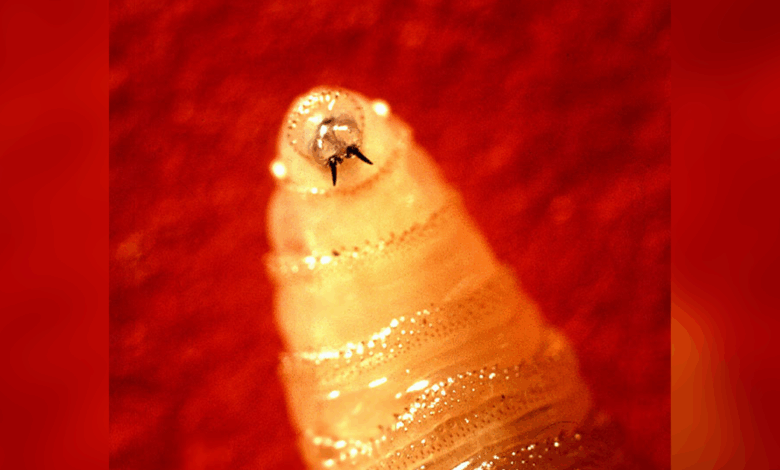
Female New World screwworm flies lay eggs in open wounds or body openings, with the larvae quickly growing and feeding on flesh. The maggots can reach up to two-thirds of an inch in length and appear as if they are screwing themselves into the flesh. While the larvae do not spread from person to person, individuals at higher risk include those living in rural areas where NWS is endemic, people with open wounds, and vulnerable populations. Symptoms of New World screwworm infestation include painful, unexplained wounds, presence of maggots around sores, and a foul odor from the affected area.
Prevention of New World screwworm infestation involves protecting against insect bites, especially in tropical areas, keeping open wounds clean and covered, and seeking medical attention if maggots are discovered in or on the body. Treatment typically involves the removal of larvae, sometimes through surgery. The CDC advises against attempting to remove the maggots oneself.
While the U.S. government is working to control the spread of New World screwworm through genetic techniques and increased surveillance, there is still a concern for potential future cases in the country. The Texas-Mexico border area is identified as a likely location for the reemergence of the parasite. Continued vigilance and proactive measures are essential in preventing and treating cases of New World screwworm infestation.