A Test Of Financial Privacy And Developer Freedoms
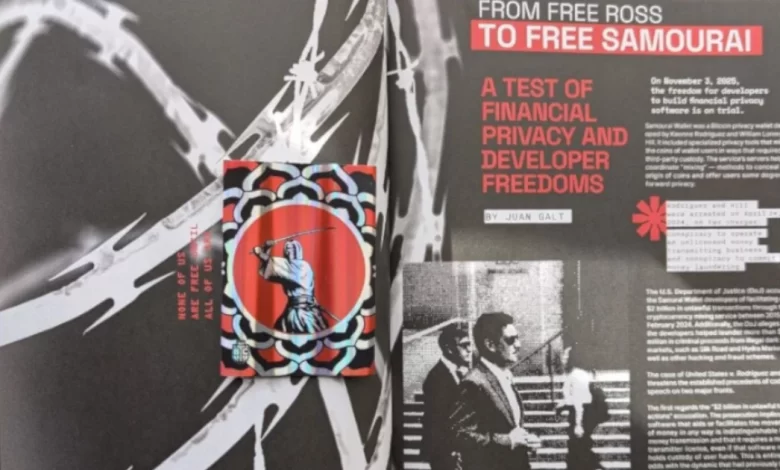
The trial of the developers behind Samourai Wallet, a Bitcoin privacy wallet, has brought the freedom for developers to build financial privacy software into question. The developers, Keonne Rodriguez and William Lonergan Hill, were arrested on charges of operating an unlicensed money transmitting business and money laundering. The U.S. Department of Justice accused them of facilitating unlawful transactions and laundering criminal proceeds.
This case challenges the established precedents of code as speech in two major ways. Firstly, the prosecution argues that any software aiding the movement of money requires a money transmitter license, even if it doesn’t hold custody of user funds. Secondly, it questions whether software that defends privacy is protected speech under the First Amendment.
The U.S. has a tradition of defending freedom of speech, with landmark cases establishing the protection of software as expressive speech. However, the Samourai case poses a new challenge to the principle that code is speech.
The Biden administration’s crackdown on the crypto industry has led to a chilling effect among Bitcoin software developers. Legacy financial institutions, compliant with regulations, gather excessive private information from customers, leading to security breaches and exposing individuals to identity theft and fraud.
The trial of Rodriguez and Hill raises concerns about privacy compromises for convenience. It highlights the importance of maintaining privacy in self-custodial Bitcoin tools and the potential impact on individual freedoms. As the trial unfolds, the future of software developers and their freedom to build private self-custody software will be shaped in an era where financial privacy is under scrutiny.
The outcome of this trial will not only impact the developers but also influence public policy regarding financial privacy. The lesson to be learned is that compromising on privacy for convenience comes with risks, and only the paranoid crypto-anarchists may survive in the long run.