A woman’s cancer seemed incurable. Identifying a rare genetic condition saved her life.
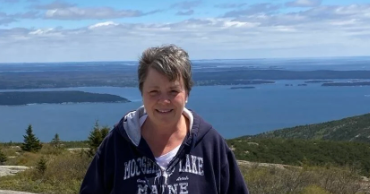
After months of unexplained illness, Diane Davis finally received a diagnosis of advanced ovarian cancer. Despite the devastating news, she felt a sense of relief knowing what she was up against. Davis had been suffering from lower back pain, nausea, and a host of other symptoms that baffled doctors. But when Dr. Christopher Darus, a gynecologic oncologist at MaineHealth Maine Medical Center, discovered a softball-sized ovarian tumor during exploratory surgery, Davis finally had clarity.
Following the surgery, Darus outlined a treatment plan that included chemotherapy. However, after just three cycles, a new mass appeared in Davis’ pelvis, signaling a rapid recurrence of her cancer. This setback, coupled with the cancer spreading to her lymph nodes, painted a grim prognosis.
Further testing revealed that Davis had Lynch syndrome, a genetic condition that predisposes individuals to various forms of cancer, including ovarian cancer. Understanding the molecular mechanisms behind Lynch syndrome opened up new treatment options for Davis. With the guidance of Darus, she started on immunotherapy using checkpoint inhibitors to activate her immune system against the cancer cells.
Remarkably, within two treatments, the new mass in Davis’ pelvis disappeared, and the cancer in her lymph nodes began to recede. The immunotherapy had a profound impact on her condition, leading to a significant improvement in her health.
Changing the Family Legacy
Davis’ Lynch syndrome diagnosis had a ripple effect on her family. With a 50% chance of inheriting the condition, Davis urged her children to undergo screening. While her son tested negative, her daughter tested positive and immediately began early cancer screenings. A colonoscopy at the age of 29 revealed a precancerous polyp, highlighting the importance of early detection and intervention.
Despite the challenges, Davis remained resilient and committed to her treatment. Two years of immunotherapy followed by regular scans have kept her cancer in remission for six years. While she remains vigilant due to the increased risk of other cancers, Davis chooses to focus on enjoying quality time with her grandkids and engaging in activities she loves.
Reflecting on her journey, Davis expressed gratitude for the unexpected turn of events that led to her current state of health. What seemed like a bleak future during her chemotherapy failure has now transformed into a positive outlook on life. Davis’ story serves as a testament to the power of personalized medicine and the resilience of the human spirit.