A young dad’s colon cancer spread to his lungs with no warning. He says a clinical trial led to a miracle.
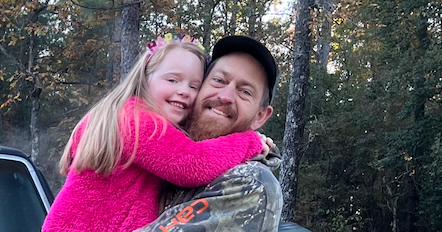
Spencer Laird’s journey with colorectal cancer began when he was just 25 years old. Initially misdiagnosed with hemorrhoids, he eventually underwent surgery to remove a portion of his colon after the discovery of colorectal cancer. Two years later, the cancer returned, spreading to his lungs with 13 tumors detected, one the size of a golf ball. Given a grim prognosis of only two years to live, Laird and his wife CarleyAnn sought out alternative treatment options.
CarleyAnn tirelessly researched clinical trials and found one at Duke University led by Dr. Nicholas DeVito, focusing on immunotherapy for microsatellite stable colorectal cancer. Typically used as a last resort after chemotherapy has failed, immunotherapy showed promising results in controlling the disease in 70% of patients. Laird decided to join the trial, seeing it as a chance to fight back against his terminal diagnosis.
The treatment involved regular immunotherapy infusions, with scans showing remarkable progress as Laird’s tumors began to shrink. From 13 tumors, he now only has three, with the largest reduced to just 0.6 millimeters. Laird experienced some side effects initially, but they subsided, and he has been responding well to the treatment since then. Dr. DeVito described Laird’s response as a “miracle” and a significant breakthrough in cancer treatment.
While Laird’s case may be a first in history, Dr. DeVito hopes to identify more patients who can benefit from early immunotherapy. Further research may explore combining immunotherapy with other treatments and refining patient selection criteria. Although immunotherapy is not yet a standard treatment for colorectal cancer, Laird’s success story offers hope for others facing similar diagnoses.
Laird continues with his treatment at Duke, visiting every two weeks for his infusion. Supported by his family and church community, he has learned to appreciate every moment and live life to the fullest. His experience has inspired him to seize each day and make the most of the time he has been given. Through his journey, Laird remains a beacon of hope and resilience in the face of cancer.