After a $3 million renovation, “cursed” Capitol Hill mansion is ready to reopen
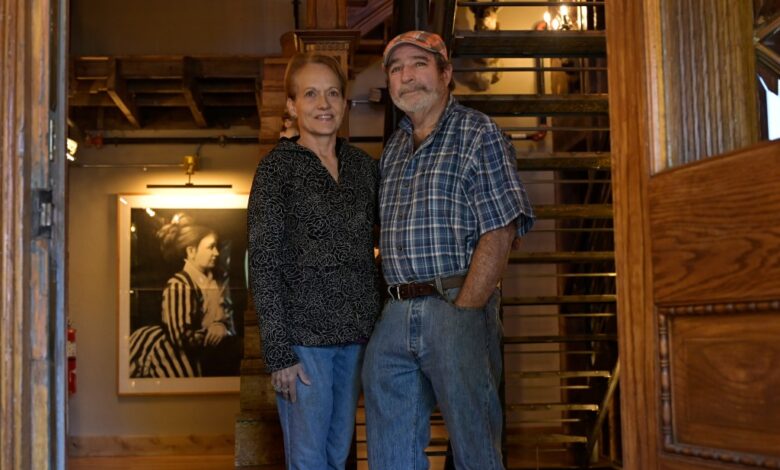
Ira Wertenteil has chosen to embrace the idea that the Peabody-Whitehead Mansion holds no grudge against him in the form of a ghostly presence. Despite this, he finds the concept of ghosts haunting him more appealing than the notion of being punished by God for a crime he is unaware of committing.
The 65-year-old developer, who is also an avid mountain climber and self-proclaimed art and architecture school dropout (later attending the University of Colorado Business School), embarked on the journey of purchasing and renovating the Queen Anne-style Victorian mansion located at 1128 Grant St. in Denver with his wife Cindy Powders 12 years ago. However, since then, he has been plagued by a series of health issues.
Wertenteil shared, “My hands and feet began to deteriorate, followed by the discovery that my spine had completely fused, a condition that had likely been progressing for years. Subsequently, I started experiencing bouts of temporary blindness every six months, and currently, I am battling three different types of cancer.”
Despite the challenges, the $3 million renovation project is nearing completion as Wertenteil and Powders prepare to move into their master condo within the eight-unit Capitol Hill residence. The other seven units will be available for public lease. Prospective residents of these luxury condos will encounter a magnificently restored architectural gem that stands as one of the remaining vestiges of Denver’s renowned Millionaires’ Row. The mansion boasts a distinctive design and an eclectic, occasionally eerie decor that pays homage to its haunted reputation.
One of the house’s bygone eras is symbolized by a restored 1929 Model A car parked in the front yard. Over the years, the Peabody-Whitehead Mansion has served as a boarding house, various nightclubs and restaurants, as well as clerical offices, among other commercial endeavors, as Wertenteil revealed.
Reflecting on the extensive project, Wertenteil remarked, “It’s a massive endeavor that embodies our backgrounds in art and architecture. However, we have not ventured down the path of those eccentric individuals who construct castles and similar structures over centuries. We are on a journey to reach that level.”
Throughout the myriad of permits, designers, and intermittent subcontractors involved in the renovation process, Wertenteil and Powders have meticulously considered every detail. The interior of the mansion showcases a harmonious blend of rich wood and sturdy walls accentuated by a fusion of ultra-modern elements and historic features. From the vibrant red bathroom tiles that emulate glossy brick walls to the intricate metal branch sculpture canopy that greets guests, the restoration project exudes a unique charm.
The interior design seamlessly integrates industrial and exposed components, such as a striking split black steel stairwell, while incorporating distinctive touches like grated cages displaying relevant curiosities. Preserved windows and doors are treated as museum artifacts, rather than mere functional fixtures, hanging elegantly within the space. Original 2x4s have been repurposed for wall embellishments, exposing the original electrical work and historic wallpapers in a meticulous grid-like pattern.
The overall aesthetic of the mansion strikes a balance between a museum-like ambiance and a whimsical playground, resulting in an impressively elaborate transformation. Despite the challenges faced during the renovation, Wertenteil and Powders find it difficult to bid farewell to the project.
“In many ways, we are reluctant to part ways with this endeavor,” Wertenteil expressed. “It’s akin to having an exquisite car parked in the garage and never taking it for a drive. However, in this case, it’s a $3 million undertaking that I am losing $20,000 per month on by not renting it out, opting instead to showcase it to my friends.”
The three-story, 6,600-square-foot brick mansion, constructed in 1889 and designed by the influential architect Frank Edbrooke, who also designed the Brown Palace Hotel in Denver, according to History Colorado, has a rich history. Initially owned by Dr. William Riddick Whitehead, a prominent surgeon at Arapaho County Hospital who later played a significant role in establishing key medical institutions in Colorado, the mansion also served as a residence for Governor James Peabody, known for his involvement in quelling a miner’s strike in Cripple Creek in 1903.
In 1993, the mansion was designated as a historic landmark by the City and County of Denver’s Preservation Commission, safeguarding its heritage amidst the changing landscape of Grant Street, where several historic structures have been replaced by high-rise apartments.
Due to its storied past and haunted reputation, the Peabody-Whitehead Mansion has become a magnet for ghost hunters, tours, and television shows, fascinated by its deep-rooted lore. Decades-old legends speak of eerie phenomena such as a chandelier lighting up mysteriously, a cantankerous undead bartender, and the lingering spirits of a bygone war, as documented by the ghost tour company Denver Terrors.
Several books and local guides recount tales of flying silverware, inexplicable sobbing sounds, and other paranormal occurrences within the mansion. Wertenteil and Powders have embraced these narratives by incorporating displays of anatomical models and surgical equipment, among other intriguing artifacts, into the meticulously curated spaces on the first floor.
Considering the house’s tumultuous history, Wertenteil’s friends have speculated about a possible curse looming over him. At present, he is focused on navigating through his chemotherapy treatments as the mansion prepares to open its doors to the public.
However, Wertenteil adamantly rejects the notion that the Peabody-Whitehead Mansion is merely a legacy project.
“I was raised in an artistic household, where my mother, an artist, exposed me to museums, and I have been deconstructing things since childhood,” Wertenteil reflected, citing the influence of artists such as Louise Nevelson, Mark di Suvero, Richard Cera, Gordon Matta-Clark, and Gaudí on the mansion’s renovations.
“Since we commenced this endeavor, I have been plagued by numerous ailments, leading me to wonder if the restless spirits within the mansion are unleashing their pent-up aggression and frustration upon me,” he added. Wertenteil hinted at the possibility of hosting an open house at the mansion on Halloween, marking the 12th anniversary of his acquisition of the property. “However, I am inclined to believe that it is merely a twist of fate.”
This report includes contributions from Denver Post photographer Hyoung Chang.