AI can help the environment, even though it uses tremendous energy. Here are 5 ways how
Artificial Intelligence and Energy Efficiency
By ALEXA ST. JOHN and JENNIFER McDERMOTT
Artificial intelligence has raised concerns due to its significant consumption of water and power. However, scientists are exploring ways in which AI can assist individuals and businesses in utilizing energy more efficiently and reducing pollution.
Data centers necessary for powering AI consumed approximately 1.5% of the world’s electricity last year, with their energy usage projected to more than double by 2030, as per the International Energy Agency. This surge could result in increased burning of fossil fuels like coal and gas, leading to the release of greenhouse gases that contribute to climate change.
Despite this, AI’s computational power, when employed to analyze energy consumption and pollution, can enhance building efficiency, optimize device charging times, decrease pollution in oil and gas production, and manage traffic lights to reduce vehicle emissions.
Experts believe that with the continued growth of such applications, they could help offset the energy consumed by AI.
“I am pretty optimistic that while more and more AI use is going to continue to increase,” said Alexis Abramson, dean of the Columbia University Climate School, “we’re going to see our ability to process be much more efficient and as a result, the energy consumption won’t go up as much as some are predicting.”
Building Efficiency: Maintenance, Cooling
AI can enhance building energy efficiency by automatically adjusting lighting, ventilation, heating, and cooling based on various factors such as weather data and electricity usage. This can significantly reduce greenhouse gas emissions from homes and buildings.
Automating air conditioning and heating schedules based on occupants’ arrivals and departures can be more efficient than manual adjustments, preventing unnecessary energy consumption. Moreover, AI can optimize building ventilation and monitor equipment maintenance needs to prevent costly repairs.
These automated processes can lead to a 10% to 30% reduction in a building’s energy consumption, according to experts.
“That’s literally a super low-hanging fruit,” said Zoltan Nagy, professor of building services at Eindhoven University of Technology.
Finding Energy- and Cost-Efficient Times for EV Charging
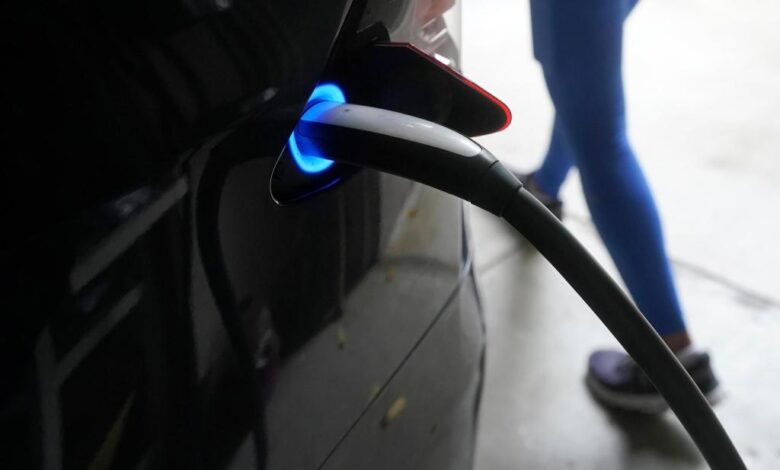
AI can determine the most efficient times for charging electric vehicles and other devices, like smartphones. By scheduling charging during off-peak hours when demand and rates are lower, AI can help reduce the reliance on fossil fuels for energy generation.
In a California pilot program, shifting charging to times with more renewable energy availability resulted in cost savings for customers.
Additionally, AI can assist homeowners with solar panels in optimizing excess energy storage in batteries.
Reducing Methane Flaring from Oil and Gas Operations
Geminus AI, a Boston-based company, utilizes deep learning to help oil and gas companies minimize methane flaring and venting, as well as reduce energy consumption in extraction and refining processes. Methane emissions reduction is crucial in combating climate change.
By monitoring wells and pipes and using AI-driven simulations, Geminus can suggest adjustments to compressor and pump settings in seconds, eliminating the need for venting and flaring. This rapid solution deployment can significantly reduce greenhouse gas emissions.
Finding Geothermal Hot Spots
Zanskar, a Salt Lake City-based geothermal energy startup, leverages AI models to identify untapped geothermal hot spots for efficient drilling. Geothermal energy is a clean electricity source favored for its renewable nature.
Zanskar’s AI simulations help pinpoint optimal drilling locations based on subsurface conditions, leading to the discovery of new geothermal reservoirs previously deemed unviable.
Reducing Traffic Emissions
Google utilizes AI and Google Maps data to optimize traffic light adjustments, reducing stop-and-go traffic and lowering pollution levels. This initiative, known as Project Green Light, has shown promising results in reducing emissions and improving air quality in cities.
“We’re just scratching the surface of what AI can do,” said Juliet Rothenberg, Google’s product director of Earth and resilience AI.