Banks are thriving so far in Trump’s economy. Here’s what that means
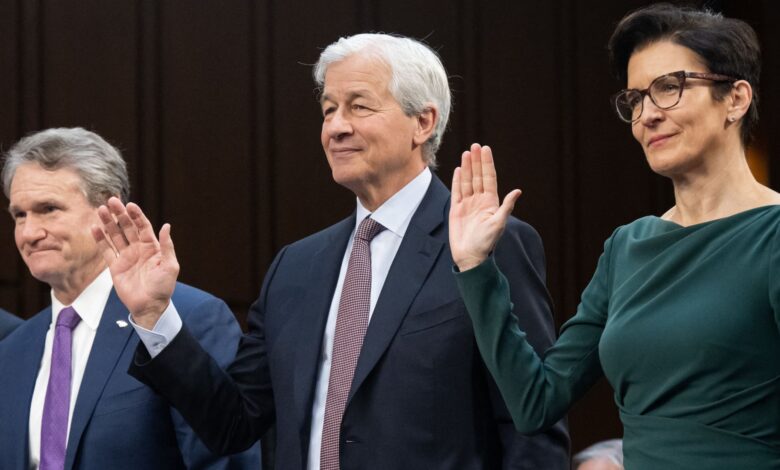
In the world of finance, things are looking surprisingly positive at the moment. Wall Street is experiencing a boom in stock and bond trading, as well as an increase in corporate acquisitions and loans. On the other hand, Main Street is holding up well, with consumers continuing to spend, borrow, and repay loans. Reports from the largest U.S. banks show that the financial sector is thriving in this profitable environment.
The six biggest U.S. banks have collectively generated over $39 billion in profit in the second quarter, exceeding analysts’ expectations and marking a more than 20% increase from the previous year. This success comes after a turbulent start to the quarter, which saw market shocks and plunging stock prices due to President Donald Trump’s “Liberation Day” tariffs. However, the markets rebounded as Trump delayed imposing harsh tariffs on trading partners, leading to increased investor confidence and a surge in corporate transactions.
JPMorgan, the largest U.S. bank, reported nearly $15 billion in quarterly profit, showcasing strong performance in trading and investment banking. The bank’s revenue from investment banking rose by 7%, surpassing analyst predictions. This uptick in activity reflects a growing acceptance of uncertainty among businesses, prompting them to move forward with major transactions.
Despite initial concerns about a recession earlier in the quarter, JPMorgan’s outlook on U.S. economic risks has improved. The bank’s provision for credit losses decreased by 14% from the first quarter, indicating a more stable economic environment. Consumer and corporate borrowing at JPMorgan has also increased, with loan growth rising by 5% compared to the previous year.
JPMorgan CEO Jamie Dimon expressed optimism about the economy, highlighting its resilience and stability in the face of global challenges. He emphasized the positive impact of recent legislative and regulatory changes on the financial sector, including corporate tax rates and deregulation efforts.
The banking industry as a whole is experiencing a period of robust growth, with banks like Wells Fargo also showing signs of resurgence. Wells Fargo CEO Charlie Scharf expressed enthusiasm about the bank’s performance and future prospects, following the removal of regulatory constraints that had limited its growth.
Citigroup, another major player in the financial sector, has seen a significant increase in its stock value this year under the leadership of CEO Jane Fraser. Fraser’s strategic initiatives and turnaround plan have been well-received by investors, leading to a 30% increase in Citigroup’s shares. Fraser’s focus on innovation and adaptability in response to the evolving economic landscape has positioned the bank for continued success.
Overall, the financial industry is thriving amidst a backdrop of economic stability and growth. Banks are capitalizing on favorable market conditions and regulatory changes to drive profits and expand their operations. With strong performances from industry leaders like JPMorgan, Wells Fargo, and Citigroup, the outlook for the banking sector appears promising in the months ahead.