Belgrade braces for another anti-government protest, calling for an early parliamentary election
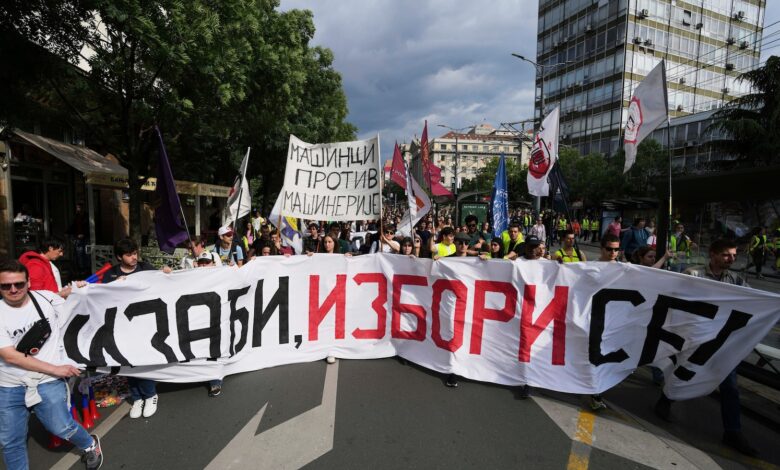
BELGRADE, Serbia — Belgrade is preparing for another student-led protest on Saturday to push Serbia’s populist President Aleksandar Vucic to announce a snap parliamentary election after almost eight months of demonstrations that have shaken his strong hold on power in the Balkan nation.
Tensions have escalated ahead of the protest organized by Serbia’s university students, a significant driving force behind nationwide anti-corruption protests that began after a renovated railway station canopy collapsed, resulting in the death of 16 people on Nov. 1.
The collapse of the concrete roof was widely attributed to widespread government corruption and negligence in state infrastructure projects, sparking ongoing mass protests.
Despite the demands for an early election, Vucic and his right-wing Serbian Progressive Party have rejected the call and accused protesters of planning violence under foreign orders, without specifying the source.
In a display of business as usual, the Serbian president presented presidential awards in the capital to individuals, including artists and journalists, whom he deemed deserving, while his supporters, stationed in a park in central Belgrade, announced a “literary evening.”
“There is no need for concern — the state will be protected and troublemakers will be brought to justice,” Vucic assured reporters on Saturday.
The Serbian presidential and parliamentary elections are scheduled for 2027.
Saturday coincides with St. Vitus Day, a religious observance and the anniversary of the 14th-century battle of Serbs against Ottoman Turks in Kosovo, marking the beginning of centuries of Turkish rule, carrying great symbolic significance.
Earlier this week, authorities in Serbia arrested several individuals accused of plotting to overthrow the government, and inexplicably denied entry to several people from Croatia and a theater director from Montenegro. The national railway company suspended train services due to an alleged bomb threat, in what critics viewed as an attempt to prevent people from traveling to Belgrade for the protest.
Similar measures were taken in March prior to what became the largest anti-government protest in the country’s history, attracting hundreds of thousands of participants.
Vucic’s supporters established a camp in a park near his office at that time, which remains in place. The peaceful gathering on March 15 was disrupted when a portion of the crowd suddenly dispersed in panic, leading to allegations that authorities deployed a sonic weapon against peaceful protesters, an accusation they have denied.
Vucic, once a staunch nationalist, has evolved into an increasingly authoritarian figure since assuming power more than a decade ago. Despite his professed desire for Serbia to join the European Union, critics argue that Vucic has curtailed democratic freedoms while strengthening ties with Russia and China.