“Black carbon” in Arctic an increasing concern amid other issues in region
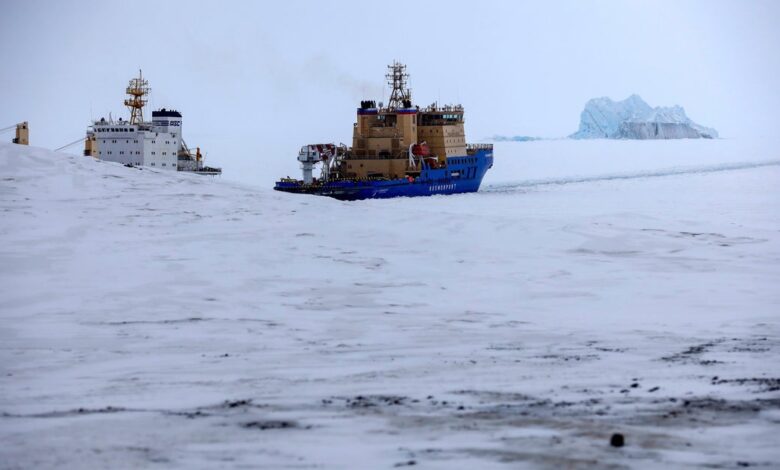
Reykjavik, Iceland — With rising global temperatures accelerating the melting of sea ice in the Arctic Ocean, there has been a significant increase in marine Arctic traffic. This surge in shipping activity, which gained attention when President Trump advocated for the United States to acquire Greenland, has come at a significant environmental cost: the release of black carbon, or soot, from ships that exacerbates the ice melt.
The environmental impact of black carbon is profound as it darkens glaciers, snow, and ice, reducing their ability to reflect sunlight. This leads to increased absorption of heat, contributing to the rapid warming of the Arctic region. The melting of Arctic sea ice not only affects the local ecosystem but also has implications for global weather patterns.
Efforts are now being made by several countries to address this issue by advocating for ships in the Arctic to use cleaner fuels that produce less pollution. France, Germany, the Solomon Islands, and Denmark have proposed that ships traveling in Arctic waters should use “polar fuels,” which emit lower levels of carbon pollution compared to traditional maritime fuels. The proposal aims to regulate emissions and black carbon, which are currently unregulated in the Arctic.
Despite a 2024 ban on heavy fuel oil in the Arctic, loopholes have limited its effectiveness. The proposal for polar fuels is expected to be presented to the International Maritime Organization in the coming months for consideration.
Alexander Zemlianichenko / AP
“Black carbon” exacerbating other regional issues
Reducing black carbon emissions, which have a warming impact 1,600 times greater than carbon dioxide over a 20-year period, is crucial in addressing the environmental challenges in the Arctic. However, conflicting interests at both international and national levels have complicated efforts to regulate black carbon.
President Trump’s focus on acquiring Greenland for U.S. security has diverted attention from environmental concerns in the Arctic. His skepticism towards climate change and opposition to global policies aimed at combating it have hindered progress in regulating emissions from shipping.
Even within Arctic nations, there are internal tensions regarding environmental regulations. Iceland, known for its advancements in green technologies, faces challenges in regulating pollution due to the influence of industries like fishing, which prioritize profits over environmental conservation.
While Iceland has not taken a definitive stance on the polar fuels proposal, the country acknowledges the need for stronger measures to address shipping emissions and reduce black carbon.
More sea traffic means more soot in the air
The increase in sea traffic in the Arctic has led to a rise in black carbon emissions from cargo ships, fishing boats, and cruise liners. The number of ships entering Arctic waters north of the 60th parallel has increased by 37% in the past decade, resulting in a significant spike in black carbon emissions.
Efforts to reduce black carbon are crucial as it plays a significant role in the warming of the Arctic region. Environmental groups and concerned countries emphasize the importance of regulating ship fuel to mitigate black carbon emissions, as limiting shipping traffic in the Arctic is not a feasible solution.
Despite the economic benefits of shorter shipping routes through the Arctic, some companies, like the Mediterranean Shipping Company, have pledged to avoid the Northern Sea Route due to environmental concerns. The debate surrounding Arctic shipping intensifies as stakeholders navigate the balance between economic interests and environmental conservation.