‘Blood & Sweat’ Examines Japan-Finland Co-Pro Realities at Tokyo
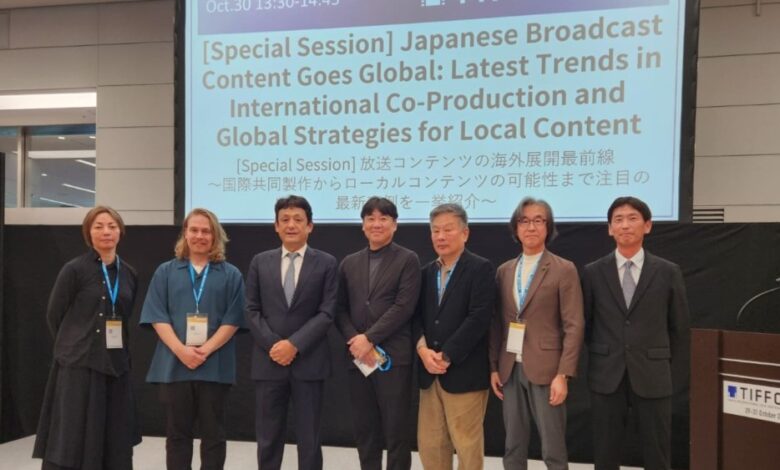
Producers of the highly anticipated crime series “Blood & Sweat”, a collaboration between Japan’s AX-ON and Finland’s ICS Nordic, recently shed light on the challenges faced during the production of this international co-production. The insights were shared at a seminar held during TIFFCOM, the market arm of the Tokyo International Film Festival.
Starring Anne Watanabe and Jasper Pääkkönen, the series revolves around two detectives from different cultural backgrounds working together to solve a series of murders. The journey from script development to filming was a complex and time-consuming process that required meticulous attention to detail.
The script development phase spanned nine months and involved extensive communication between writers and producers. Scripts were initially written in English, translated into Japanese, and then carefully reviewed to ensure cultural nuances were accurately portrayed. According to AX-ON producer Daniel Toivonen, this back-and-forth process was crucial in crafting authentic dialogue for the characters.
One of the major challenges faced during filming was the clash of working cultures between Finnish and Japanese crew members. Finnish crews adhere to strict union rules that prioritize work-life balance, in contrast to the more flexible Japanese filming practices. Additionally, the cost of labor in Finland is higher than in Japan, adding to the production expenses.
Toivonen highlighted the differences in time management practices, noting that Finnish crews strictly follow a capped filming schedule of four 12-hour days per week. This posed logistical challenges as Japanese filming practices often require longer work hours and more days on set. The need for additional English-speaking staff members further added to the budget constraints.
Moreover, creative decision-making processes varied between Finnish and Japanese production cultures. Finnish directors tend to delegate decision-making to department heads, fostering a collaborative working environment. This decentralized approach was evident in costume design discussions, where a Finnish director deferred to the wardrobe department’s expertise.
In addition to discussing the challenges of international co-productions, the seminar also introduced the Local Content Bank (LCB) initiative. Led by Miyazaki Telecasting Company, this platform aims to centralize and streamline Japanese content for global audiences. By utilizing AI technology, the platform categorizes and re-formats content from various regional television stations, making it easier for users to access and create new programming.
Overall, the insights shared at the seminar highlighted the intricacies and complexities involved in international co-productions, emphasizing the importance of effective communication, cultural sensitivity, and adaptability in the filmmaking process.