Boston Fed President Collins advocates holding rates steady, sees ‘high bar’ for further cuts
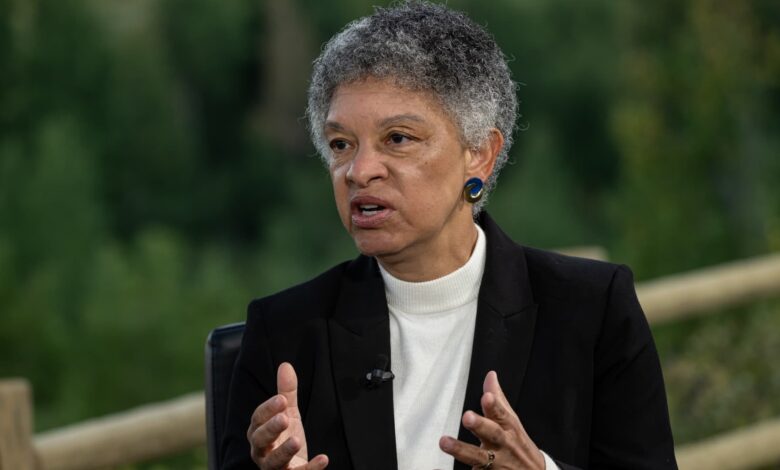
Susan Collins, the president and CEO of the Federal Reserve Bank of Boston, recently expressed her reluctance to support further interest rate cuts in the current economic climate. In a speech delivered in her home district, Collins emphasized the need to balance the risks of inflation and employment in an uncertain environment.
As a voting member of the Federal Open Market Committee, Collins’ stance on interest rates holds significant weight. While she did support a quarter percentage point rate cut at the October meeting, she cautioned against further easing that could hinder the Fed’s efforts to bring inflation down to its target of 2%.
Collins acknowledged the softness in the labor market but emphasized the importance of exercising caution due to the risks of inflation remaining above the target level. She highlighted the potential consequences of providing additional monetary support to economic activity, which could potentially slow down the return of inflation to target levels.
The government shutdown also played a role in Collins’ decision-making process. While the impasse has since been resolved, the delayed release of key reports on inflation and employment has limited the amount of information available for policymakers.
In light of these factors, Collins stated that she would be hesitant to support further interest rate cuts unless there is clear evidence of a significant deterioration in the labor market. The limited information on inflation due to the government shutdown further complicates the decision-making process for policymakers.
At the October meeting, the FOMC voted 10-2 in favor of the rate cut, with Governor Stephen Miran advocating for a larger reduction and Kansas City Fed President Jeffrey Schmid opposing any cuts. This division within the committee underscores the complexities of the current economic environment and the differing perspectives on the best course of action.
Overall, Collins’ cautious approach to interest rate cuts reflects the challenges faced by policymakers in navigating the uncertain economic landscape. Balancing the risks of inflation and employment remains a priority, and her remarks shed light on the complexities of monetary policy decision-making in the current climate.