Brent crude touches $115 a barrel, while U.S. stocks resume a losing streak

The price of Brent crude oil surged to $115 a barrel on Monday following threats from President Trump regarding potential military action against Iran. Trump warned that the U.S. could target Iranian infrastructure, including power plants and oil wells, if the vital shipping lane of the Strait of Hormuz is not reopened. This news caused a spike in oil prices, with Brent crude hitting $115 before settling at $114.30, while West Texas Intermediate rose 5% to $105.
The impact of these developments was felt across financial markets, with U.S. stocks experiencing volatility. Major indices, including the Dow Jones Industrial Average and the S&P 500, fluctuated throughout the day. The Dow Jones entered correction territory amid concerns about the economic consequences of a potential conflict with Iran. Economists warned that a war with Iran could heighten the risk of a U.S. recession this year.
Despite the uncertainty and market turbulence, some investors are searching for opportunities amid the chaos. The S&P 500 index is currently trading at a discount of around 17% compared to pre-war levels, making it an attractive option for bargain hunters. Analysts at Morgan Stanley believe that this correction may be nearing its end, signaling a potential buying opportunity for savvy investors.
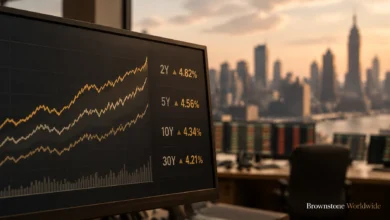
One of the key concerns stemming from the conflict with Iran is the potential impact on inflation. If oil prices remain elevated, the Federal Reserve may need to consider raising interest rates to curb inflationary pressures. This could have a domino effect on the economy, slowing growth and affecting various asset classes. Treasury yields have been rising in response to these fears, but they saw a slight decrease on Monday, providing some relief to investors.
Overall, the situation in the Persian Gulf continues to pose risks to global markets, with uncertainty surrounding the resumption of oil and gas exports from the region. As investors navigate these choppy waters, it is essential to monitor developments closely and assess the potential implications for the economy and financial markets.