California cuts back illegal immigrants access to healthcare, cutting into $12B deficit
California Governor Gavin Newsom signed a budget on Friday that includes significant cuts to progressive priorities in order to address a $12 billion deficit. This marks the third consecutive year that the state has had to make tough financial decisions.
The budget, totaling $321 billion, was passed by lawmakers following an agreement between Newsom and Democratic leaders. However, Newsom has made it clear that the budget will only be valid if legislation is passed by Monday to make it easier to build housing.
While the budget avoids drastic cuts to essential safety net programs, it relies on using state savings, borrowing from special funds, and delaying payments to close the budget gap. Newsom emphasized that the budget is balanced, maintains substantial reserves, and aims to support Californians in these challenging times.
California is also facing potential federal cuts to health care programs and economic uncertainty, which could result in further cuts to state programs. Newsom estimated that federal policies, such as tariffs and immigration enforcement, could lead to a $16 billion reduction in state tax revenue.
Republican lawmakers criticized the budget negotiations, claiming they were left out of the process. They also expressed concerns about the lack of measures to address future deficits, which could range from $17 billion to $24 billion annually.
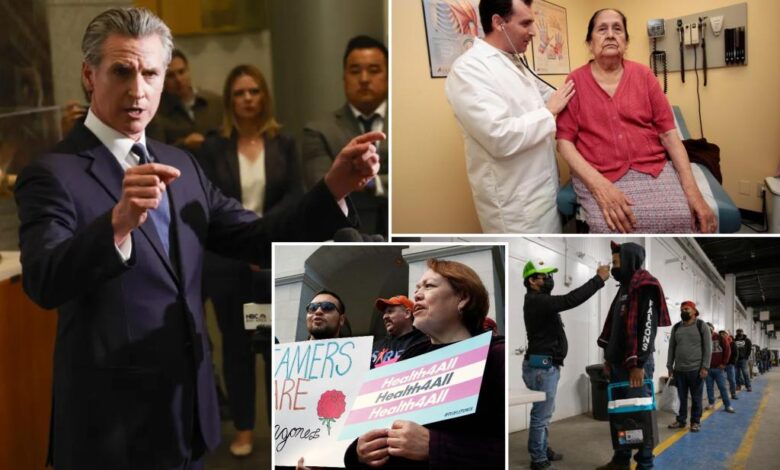
In terms of spending, the budget includes changes to health care programs. Starting in 2026, California will stop enrolling new adult patients without legal status in its state-funded health care program for low-income individuals. Additionally, a $30 monthly premium will be implemented in July 2027 for immigrants remaining on the program.
The budget also includes cuts to mental health services, dental services for low-income individuals, and a delay in implementing legislation requiring health insurance to cover fertility services. However, funding for in-home care services and Planned Parenthood was secured.
On the environmental front, lawmakers agreed to allocate $1 billion from the cap-and-trade program to fund state firefighting efforts. The budget also includes funding to transition part-time firefighters into full-time positions and increase wages for incarcerated firefighters.
In terms of public safety, $80 million will be provided to implement a tough-on-crime initiative approved by voters last year. The measure includes increased penalties for certain offenses and additional funding for behavioral health beds, probation services, and court support.
Other priorities in the budget include raising the state’s film tax credit to $750 million annually, providing funding for immigration legal services, and supporting Hollywood. However, cities and counties will not receive additional funding to address homelessness, and a proposed project to create an underground water tunnel has not been addressed in the budget.
Overall, the budget reflects the difficult financial situation facing California and the tough decisions that had to be made to address the deficit. Newsom and lawmakers worked together to navigate these challenges and make the necessary adjustments to keep the state running smoothly.