Can adults be trained to better recognize and avoid sick faces?
The University of Miami conducted research that demonstrated children’s ability to recognize sick faces, indicating that individuals can pick up on illness cues from facial expressions. Building on this study, researchers from the University of Miami, James Madison University, and Duke University delved further into the topic to investigate whether training could enhance this skill of identifying sick faces.
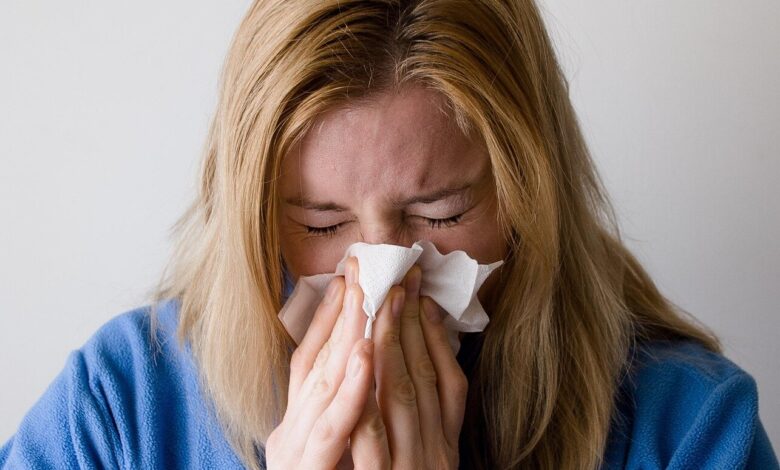
Published in the journal Vision, the study involved 133 adults, primarily University of Miami undergraduates, who participated in a carefully crafted experiment. Participants viewed 32 photos of 16 individuals, captured while healthy and while sick with contagious illnesses like COVID-19, flu, strep throat, or a cold. This approach allowed researchers to control for variables such as age, attractiveness, and facial structure.
Half of the participants underwent disease training, which included an interactive story, an educational video on infectious diseases, and practice trials with feedback on identifying sick faces. The emphasis was on key facial features indicating illness, such as drooping eyelids and relaxed facial muscles around the mouth.
Interestingly, the trained group exhibited improved avoidance of sick individuals, with accuracy increasing from 65% to 70%, while the control group showed no enhancement. The training did not impact explicit recognition of sick faces, but rather improved participants’ unconscious avoidance behaviors.
Using eye-tracking technology, researchers observed that the trained group scanned faces more evenly, making systematic comparisons between sick and healthy faces. They also focused more on the eyes and mouth—key regions for identifying sickness—compared to the control group.
The findings have significant implications for public health, suggesting the potential development of programs to educate children on avoiding disease and training healthcare professionals to recognize subtle illness cues. The research team acknowledged ethical concerns around hypervigilance about illness and emphasized the aim of improving accuracy in identifying sick individuals.
Moving forward, the team plans to expand their research by recruiting children to test whether similar training can enhance sick face perception in younger individuals. They are also exploring individual differences, such as gender-based variations in sick face recognition skills.
The collaboration with researchers in China aims to test the generalizability of the findings across cultures. The researchers highlighted the importance of volunteers who shared photos for the study and encouraged further participation to advance the research.
For more information on this research, individuals can visit the Social Cognition Lab website. The study was published in the journal Vision under the title “Training Improves Avoidance of Natural Sick Faces: Changes in Visual Attention and Approach Decisions.”