Canada’s David Eby admits drug plan backfired: ‘I was wrong’
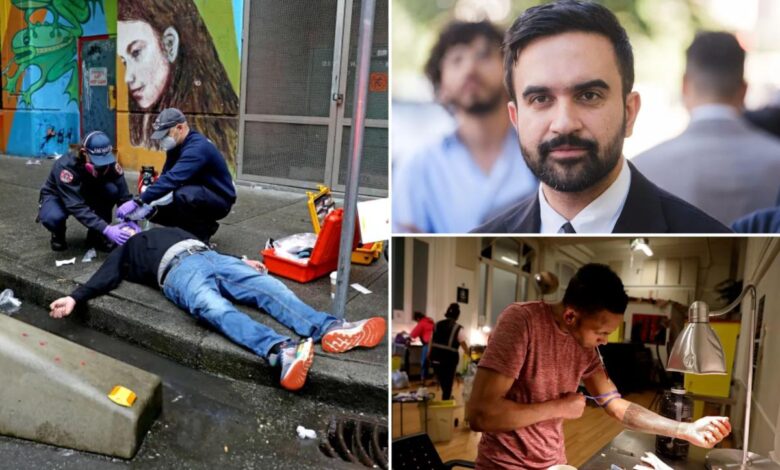
The province of British Columbia in Canada, known for its open-air drug use and supervised injection sites, has recently faced criticism over its decision to decriminalize drugs. The premier of British Columbia, David Eby, admitted that decriminalizing drugs was a mistake during a talk organized by the Urban Development Institute in Vancouver.
Eby acknowledged that the policy of drug decriminalization led to unintended consequences, making it seem acceptable to use drugs anywhere, which resulted in negative outcomes. Despite the initial intention of saving lives, British Columbia continues to struggle with the opioid crisis, with a public health emergency declared in 2016 due to a rising death toll from drug overdoses.
Since the declaration of the state of emergency, over 16,000 people have lost their lives to drugs in British Columbia. The province decriminalized drugs in January 2023, but the number of drug-related deaths continued to rise, with 2,511 deaths reported that year. This high death toll, with 47 deaths per 100,000 people, compared to 32 deaths in New York State, raised concerns about the effectiveness of the decriminalization policy.
Despite the alarming statistics and negative outcomes in British Columbia and nearby Oregon, where similar drug decriminalization measures were implemented, the Democratic Socialists of America (DSA) in New York City continue to advocate for similar policies. Zohran Mamdani, a mayoral candidate supported by the DSA, and his colleagues are pushing for drug decriminalization and the establishment of more supervised injection sites in New York City.
Critics argue that the DSA’s support for drug-friendly jurisdictions like British Columbia ignores the evidence of the negative impact of such policies. Rafael Mangual, a public safety expert, criticized the DSA for prioritizing ideology over facts and evidence that contradict their claims.
Despite the backlash and negative consequences of drug decriminalization in British Columbia, the government has only made minor adjustments to the policy, banning drugs in public areas but allowing them in homes, shelters, and government-sanctioned clinics. The province also introduced a “safer supply program” that encourages doctors to prescribe opioids to drug addicts as a safer alternative to street drugs.
The leaked government memo revealed that a significant portion of the prescribed drugs were getting into the hands of transborder organized crime, raising concerns about the effectiveness and safety of the program. With the increase in opioid prescriptions and the ongoing challenges in addressing the opioid crisis, critics are calling for a reassessment of the drug decriminalization policies in British Columbia and a more evidence-based approach to tackling drug addiction and overdoses.