Business

Cascade of A.I. Fakes About War With Iran Causes Chaos Online
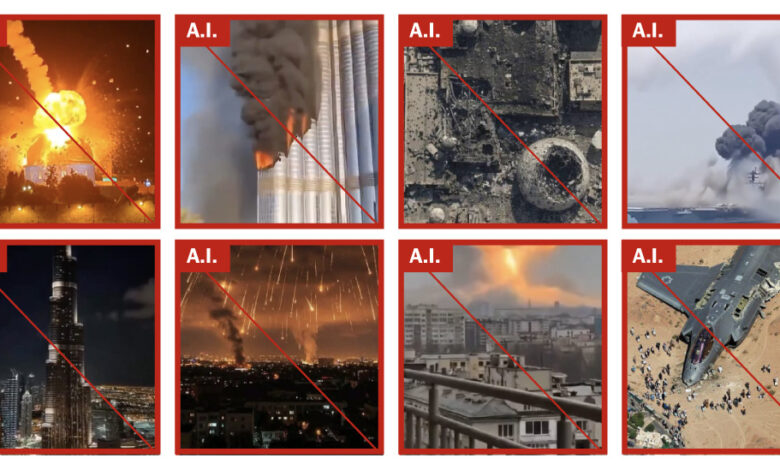
to manipulate the war narrative often include subtle details that can reveal the fakeness of the content, such as the lack of realistic movements or inconsistencies in the scene. Despite the efforts to deceive, the use of A.I. in creating fake images and videos during the war in Iran has raised awareness about the potential dangers of misinformation and the need for vigilance in verifying online content.

A.I.

A.I.

A torrent of fake videos and images generated by artificial intelligence have overrun social networks during the first weeks of the war in Iran.

The videos — showing huge explosions that never happened, decimated city streets that were never attacked or troops protesting the war who do not exist — have added a chaotic and confusing layer to the conflict online.

The New York Times identified over 110 unique A.I.-generated images and videos from the past two weeks about the war in the Middle East. The fakes covered every aspect of the fighting: They falsely depicted screaming Israelis cowering as explosions ripped through Tel Aviv, Iranians mourning their dead and American military vessels bombarded with missiles and torpedoes.

Collectively, they were seen millions of times online through networks like X, TikTok and Facebook, and countless more times within private messaging apps popular in the region and around the world.

The Times identified the A.I. content by checking for both obvious signs — such as depictions of buildings that do not exist, garbled text and behaviors or movements that defy expectations — and for invisible watermarks embedded within the files. The posts were also checked with multiple A.I. detector tools and compared with reports from news organizations.

A sophisticated new wave of A.I. tools makes the fakes possible, enabling nearly anyone to create lifelike simulations of war that can deceive the naked eye for little to no cost. Similar content has spread in other conflicts, including the war between Ukraine and Russia. But this war has multiple fronts, and that has led to a proliferation of fake content since the United States and Israel first attacked Iran, according to experts.

“Even compared to when the Ukraine war broke out, things now are very different,” said Marc Owen Jones, an associate professor of media analytics at Northwestern University in Qatar. “We’re probably seeing far more A.I.-related content now than we ever have before.”

Overall, the A.I. fakes included …

37 fake images and videos falsely depicting active war

5 fake images and videos falsely depicting war preparation

8 fake images and videos falsely depicting destruction

A.I.

A.I.

A.I.

A.I.

A.I.

A.I.

5 fake images and videos falsely depicting crying soldiers

43 memes and overt uses of A.I.

A.I.

A.I.

A.I.

A.I.

A.I.

A.I.

A.I.

A.I.

A.I.

A.I.

A.I.

A.I.

A.I.

Related Articles

Back to top button