CDC’s new acting director Jim O’Neill faces looming decisions on vaccines
The Centers for Disease Control and Prevention (CDC) is currently facing a critical juncture following the recent ousting of CDC Director Susan Monarez, who was removed from her position less than a month into her tenure. This decision came after Monarez resisted Secretary Robert F. Kennedy Jr.’s attempts to align the CDC with his vaccine policy agenda. In the aftermath of Monarez’s departure, three senior leaders, including the chief medical officer and the heads of vaccine safety and respiratory infections, resigned in protest, citing concerns about biased scientific reviews and the withdrawal of key documents.
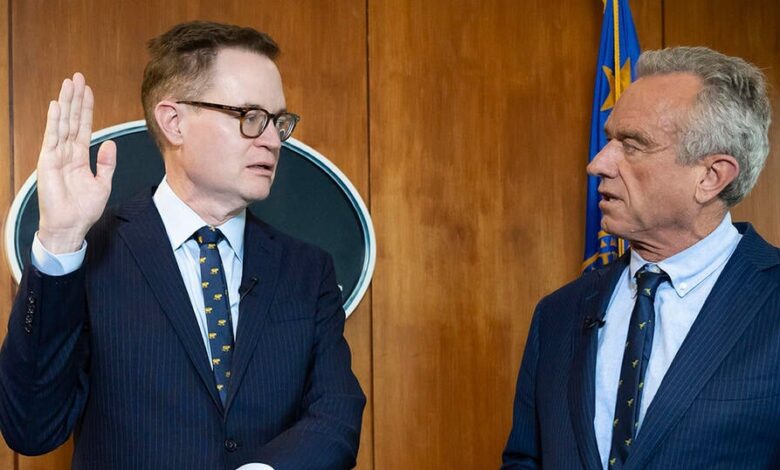
Stepping into the role of acting CDC director is Jim O’Neill, deputy secretary of Health and Human Services. O’Neill’s background deviates from the traditional CDC profile, as he is neither a physician nor a scientist. With a career that includes government service during the Bush administration and a lengthy tenure in Silicon Valley as an investor, O’Neill brings a unique perspective to the agency. Despite his unconventional background, former colleagues describe him as intelligent and well-versed in HHS operations. However, O’Neill’s libertarian views, particularly his controversial stance on drug approval, have raised concerns among public health experts.
In the wake of his appointment, O’Neill has reassured the public of his support for vaccines. However, his recent social media posts questioning the efficacy of vaccines and suggesting that the CDC could redefine the definition of a vaccine have sparked further apprehension about his understanding of vaccine science. As O’Neill continues to serve in an acting capacity, the White House and Secretary Kennedy are hesitant to undergo a contentious Senate confirmation process.
As O’Neill navigates his new role, the CDC’s vaccine advisory committee, now composed of Kennedy appointees, is gearing up for a crucial meeting in September. The agenda includes discussions on various vaccines, such as the newborn hepatitis B dose, infant RSV protection, COVID vaccination for healthy children, and the combined MMRV shot. The outcomes of these discussions could have far-reaching implications for public health programs and coverage.
The stakes are high for the CDC under O’Neill’s leadership. He has pledged to refocus the agency on infectious diseases and restore trust in its recommendations. However, concerns persist among staff and state partners about politicized decision-making and budget cuts impacting the agency’s core functions. The upcoming vaccine advisory meeting will serve as a litmus test for O’Neill’s commitment to scientific integrity and transparent processes.
In conclusion, the CDC finds itself at a critical juncture with Jim O’Neill at the helm. The decisions made in the coming months will shape the agency’s credibility and its ability to provide evidence-based guidance to states and families. It remains to be seen whether O’Neill can successfully navigate the challenges ahead and steer the CDC towards a path of stability and trustworthiness in these uncertain times.