Centrist Republicans rebel, force a vote on Obamacare subsidy extension in blow to Speaker Johnson
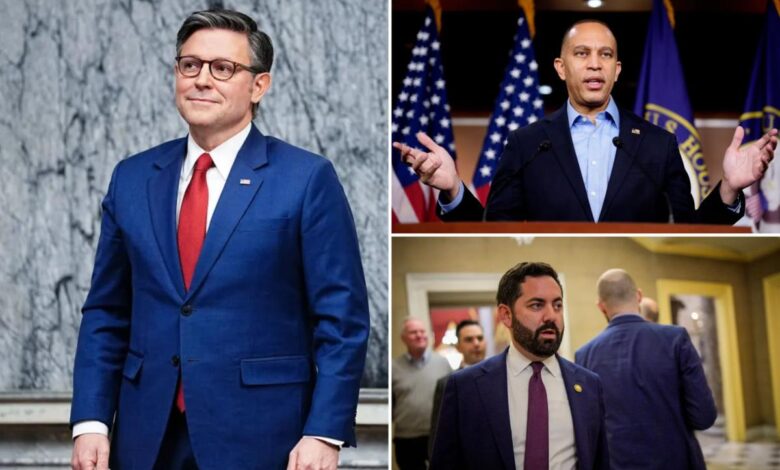
Four swing-district House Republicans caused a stir on Wednesday by breaking ranks with GOP leadership and supporting a Democratic effort to force a vote on extending enhanced Obamacare subsidies. This move dealt a blow to House Speaker Mike Johnson, who found himself in a challenging position as a result.
The four Republicans joined House Minority Leader Hakeem Jeffries in signing a discharge petition to push for a three-year extension of the enhanced subsidies, which are set to expire on December 31. Johnson, in response to the petition gaining enough signatures, insisted that he had not lost control and emphasized the unique circumstances of the current political climate with the smallest majority in US history.
This discharge petition marked the fourth such instance this year where the necessary 218 signatures were obtained, allowing for a vote to be forced. While historically discharge petitions have had a low success rate, recent changes in the dynamics of Congress have made them more effective.
The four Republican defectors included Reps. Brian Fitzpatrick, Mike Lawler, Rob Bresnahan, and Ryan Mackenzie, who joined forces with a solid bloc of 214 Democrats. The process required a waiting period of seven legislative days before the issue could be brought to the floor for a vote, putting pressure on GOP leadership to act within two legislative days once initiated.
Despite the House being adjourned for the holidays after this week, a vote on the extension is likely to be delayed until January unless Johnson accelerates the timeline. Jeffries urged immediate action on the issue, highlighting the bipartisan support for the extension.
If the extension passes in the House, it will face challenges in the Senate, where a recent vote fell short of the required threshold. However, with millions of Americans facing potential health insurance rate hikes, a successful House vote could increase pressure on Senate GOP leadership to address the issue.
Efforts to propose alternative solutions to extending the enhanced Obamacare subsidies have faced obstacles in the Senate as well. The expiration of these subsidies would impact over 20 million Americans, with an estimated 3.8 million more individuals becoming uninsured between 2026 and 2034.
Moderate Republicans had been engaged in negotiations for an alternative to extending the subsidies, but with talks stalling, some members felt compelled to support the discharge petition. Lawler and his colleagues sought a compromise that would extend the credits while implementing reforms to Obamacare, emphasizing the need for action in the face of leadership inertia.
Fitzpatrick, a member of the bipartisan Problem Solvers’ Caucus, expressed frustration at the rejection of alternative proposals and emphasized the importance of giving the American people a voice in the decision-making process. The failure to secure a floor vote on the compromise led him and others to support the discharge petition as a last resort.
The Democrats’ push for extending the enhanced subsidies during a previous government shutdown did not yield results, and President Trump has advocated for redirecting the funds to low-income Americans rather than insurance companies. The debate over the future of healthcare subsidies remains contentious, with implications for millions of Americans depending on the outcome.