Chicago’s ‘rat hole’ likely caused from other critter: researchers
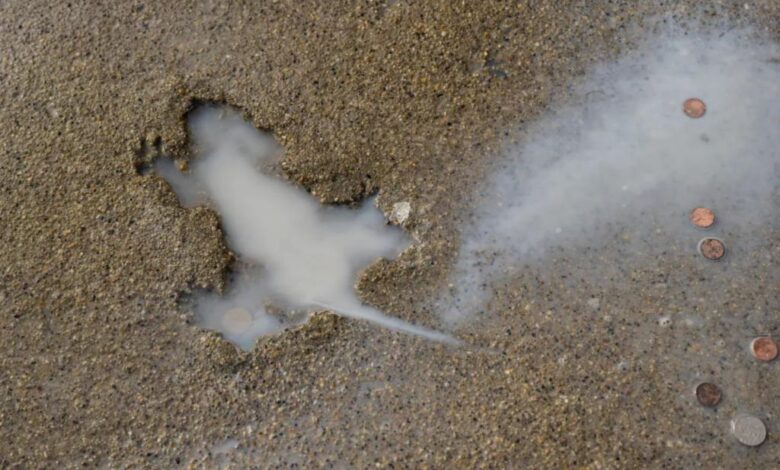
Ah, rats!
Researchers have recently uncovered the truth behind Chicago’s infamous “rat hole,” a peculiar landmark that has puzzled locals and tourists alike for years. Contrary to popular belief, the rat hole was not a dingy establishment or a rundown building. In fact, it was a full-body impression of an unfortunate critter that had become trapped in wet sidewalk cement in the city’s Roscoe Village neighborhood several decades ago.
The imprint, which closely resembled a spread-eagled rat complete with tiny claws, arms, legs, and a tail, gained widespread attention after a photo of it was posted online by comedian Winslow Dumaine. The image went viral, drawing curious visitors to the site who left coins and odd objects as tributes to the unusual landmark.
However, the constant foot traffic and attention from tourists led to complaints from neighbors. In April 2024, someone filled the impression with a plaster-like substance, prompting city workers to remove the slab of sidewalk and relocate it to the City Hall-County Building. A plaque commemorating the rat hole remains at the original site as a tribute to its bizarre origins.
A recent study conducted by researchers from the University of Tennessee, New York Institute of Technology College of Osteopathic Medicine, and the University of Calgary shed light on the true identity of the creature that created the impression. Based on measurements and comparisons to local wildlife specimens, the researchers concluded that the imprint was most likely made by a squirrel or a muskrat, not a rat as previously believed.
The distinct features of the imprint, including long forelimbs, third digits, and hind paws, ruled out birds, snakes, frogs, and turtles, narrowing the possibilities down to mammals. The size and shape of the limbs were consistent with Eastern gray squirrels, fox squirrels, and muskrats, with the Eastern gray squirrel being the most probable suspect due to its prevalence in the Chicago area.
Although some researchers had previously speculated that a squirrel was responsible for the imprint, the study provided further evidence to support this theory. The absence of tracks and the timing of the incident, which likely occurred during the day when cement was wet and rats are nocturnal, suggested that a squirrel had accidentally landed in the cement while jumping or slipping from a branch.
While the imprint did not show any signs of a bushy tail, the researchers noted that hair is not always rigid enough to create well-defined impressions in wet cement. As a result, they proposed renaming the landmark the “Windy City Sidewalk Squirrel” to better reflect its likely origins and the evidence at hand.
In conclusion, the mystery of Chicago’s rat hole has finally been debunked, revealing a fascinating tale of a squirrel or muskrat’s misadventure immortalized in sidewalk cement. The strange imprint serves as a reminder of the unexpected wonders that can be found in even the most ordinary of places.