China is set to kick off its big policy meeting. What will be the key announcements?
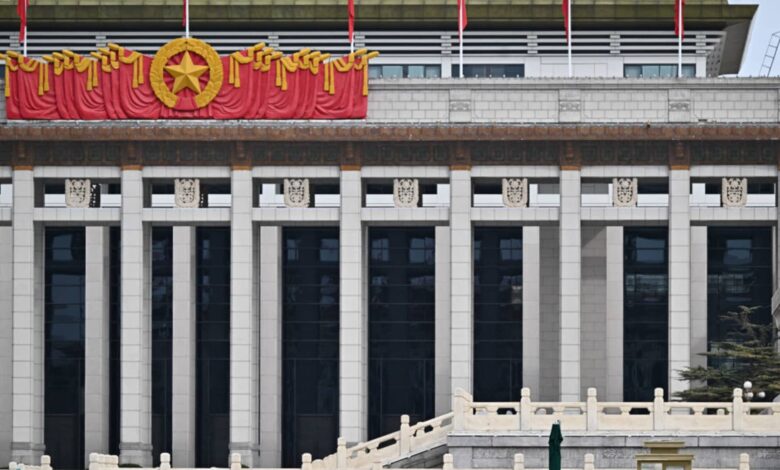
China’s annual parliamentary meeting, known as the “Two Sessions,” is set to begin this week in Beijing. This highly anticipated gathering will see top policymakers unveil growth targets and stimulus plans for the year ahead. Premier Li Qiang is expected to announce a series of economic targets at the National People’s Congress, with a focus on a new five-year development plan aimed at achieving technological self-sufficiency.
Investors will be closely watching for details on how Beijing plans to achieve its domestic tech ambitions, as well as clues on the country’s path towards its 2035 goals. Senior Chinese leaders, including top diplomat Wang Yi, will address the press during the Two Sessions, which typically lasts around a week and is scheduled to conclude on March 11.
One key announcement economists are anticipating is a GDP growth target of around 4.5% to 5%. Several Chinese local governments have already lowered their growth ambitions for 2026, indicating that Beijing may follow suit with a national target below 5%. This would be the lowest growth target on record, down from around 5% in recent years. Analysts at the Economist Intelligence Unit predict a 4.6% growth rate, citing the need for structural reform.
In terms of inflation, a target of around 2% is expected, while a budget deficit of 4% is anticipated. This deficit would match last year’s record high, signaling continued government spending relative to GDP. Policymakers will also address consumer stimulus measures, trade tensions with the U.S., the property market, and the impact of geopolitical conflicts.
Despite these targets and plans, China faces persistent challenges. Logan Wright of the Rhodium Group warns of a growing gap between Beijing’s economic targets and its actual capacity to support domestic demand. The financial system heavily lends to unproductive entities, leading to declining returns on investment and economic activity. Private sector investment remains weak, highlighting the need for sustainable economic policies.
As China navigates these challenges and sets its economic course for the year ahead, the world will be watching closely to see how the country balances growth targets with structural reform and technological advancement. The outcomes of the Two Sessions will not only shape China’s economic trajectory but also have ripple effects on the global economy. The world of technology is constantly evolving, with new advancements and innovations being made every day. One such advancement that is gaining popularity is the development of AI technology. AI, or artificial intelligence, is the simulation of human intelligence processes by machines, especially computer systems. This technology has the potential to revolutionize industries and improve the way we live and work.
One of the key benefits of AI technology is its ability to automate tasks that were previously performed by humans. This can save time and resources, allowing businesses to operate more efficiently. For example, AI can be used to analyze large amounts of data quickly and accurately, allowing companies to make better decisions based on real-time information.
AI technology is also being used in healthcare to improve patient care and outcomes. AI-powered systems can analyze medical images, such as X-rays and MRIs, to detect abnormalities and diagnose diseases earlier than traditional methods. This can lead to faster treatment and improved patient outcomes.
In the field of transportation, AI technology is being used to develop self-driving cars that can navigate roads and traffic without human intervention. This has the potential to reduce accidents and traffic congestion, as well as improve the overall efficiency of transportation systems.
AI technology is also being used in the financial industry to detect fraudulent activity and make better investment decisions. By analyzing large amounts of data, AI-powered systems can identify patterns and trends that humans may overlook, leading to more accurate predictions and better risk management.
While the potential benefits of AI technology are vast, there are also concerns about its impact on jobs and privacy. As AI technology becomes more advanced, there is the potential for it to replace human workers in certain industries. Additionally, there are concerns about the use of AI in surveillance and the potential for it to infringe on individual privacy rights.
Overall, AI technology has the potential to revolutionize industries and improve the way we live and work. While there are concerns about its impact, with proper regulation and oversight, AI technology can be used to benefit society in a variety of ways. As the technology continues to evolve, it will be important for policymakers, businesses, and individuals to consider the ethical implications and ensure that AI is used responsibly and ethically.