China’s July manufacturing activity contracts more than expected
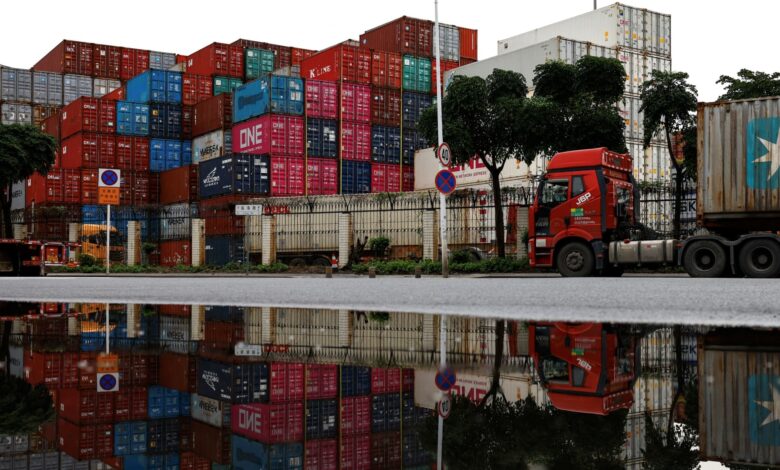
China’s official manufacturing activity gauge for July fell short of expectations, indicating a contraction in the sector amidst slower economic growth and ongoing trade tensions with the United States. The Manufacturing Purchasing Managers’ Index (PMI) for July was recorded at 49.3, missing the forecasted 49.7 according to a Reuters poll. This marks the fourth consecutive month that China’s official manufacturing PMI has been below the 50 mark, signaling a contraction in the industry.
According to Cameron Johnson, a senior partner at consulting firm Tidalwave Solutions in Shanghai, the lower PMI can be attributed to weather challenges and the shift of some orders to countries with lower tariffs, such as Vietnam. Despite these challenges, Johnson predicts that overall export figures will remain stable in the coming quarter as some production is being relocated to take advantage of lower tariffs until China and the U.S. reach a resolution on trade duties.
The escalating trade tensions between the world’s two largest economies have significantly impacted China’s manufacturing sector. In April, both countries imposed tariffs exceeding 100% on each other’s imports, leading to a temporary truce in May with reduced duties. However, this truce is set to expire in mid-August, and recent talks in Stockholm did not result in an extension of the agreement.
The latest data also revealed that sub-indexes for employment, new orders, and raw materials inventory all contracted in July. The National Bureau of Statistics attributed the decline in manufacturing PMI to factors such as extreme weather conditions, including heavy rain and high temperatures in certain regions of the country. Additionally, Beijing’s efforts to address overcapacity issues through “anti-involution” measures have further impacted the economy, as noted by analysts at Goldman Sachs.
The non-manufacturing PMI, which measures activity in service sectors like tourism, also saw a decline in July to 50.1 from 50.5 in June. This aligns with predictions of a slowdown in economic growth in the second half of the year, as the surge in GDP in the first six months was largely driven by businesses increasing orders ahead of tariff uncertainties.
Looking ahead, there is little incentive for businesses to ramp up orders again, regardless of the outcome of trade negotiations. This could lead to a more pronounced impact of tariffs on China’s economy from August onwards. The lack of substantial new stimulus measures discussed during a recent Politburo meeting indicates that China may not be planning significant policy support for the economy, unless a trade truce extension is agreed upon.
In conclusion, China’s manufacturing sector is facing challenges from multiple fronts, including adverse weather conditions, trade tensions with the U.S., and a potential slowdown in economic growth. It remains to be seen how the country will navigate these obstacles and whether a resolution to the trade dispute will be reached in the near future. The Benefits of Adopting a Plant-Based Diet
In recent years, there has been a growing trend towards adopting plant-based diets for health, environmental, and ethical reasons. A plant-based diet is one that focuses on consuming foods that come from plants, such as fruits, vegetables, whole grains, nuts, and seeds, while minimizing or eliminating the consumption of animal products like meat, dairy, and eggs. This diet has been shown to have numerous benefits for both individuals and the planet.
One of the primary benefits of a plant-based diet is its positive impact on health. Research has shown that plant-based diets are associated with a lower risk of chronic diseases such as heart disease, diabetes, and certain types of cancer. This is because plant-based foods are typically lower in saturated fats and cholesterol, and higher in fiber, vitamins, and antioxidants, all of which are important for maintaining good health. In fact, several studies have found that individuals who follow a plant-based diet have lower rates of obesity, high blood pressure, and other health conditions compared to those who consume animal products regularly.
Additionally, a plant-based diet can also help with weight management. Plant-based foods are generally lower in calories and fat than animal products, making it easier to maintain a healthy weight. Many people find that they are able to lose weight or maintain their weight more easily on a plant-based diet, without having to restrict their food intake or follow fad diets.
Another benefit of a plant-based diet is its positive impact on the environment. The production of animal products like meat and dairy is a major contributor to greenhouse gas emissions, deforestation, and water pollution. By choosing to eat more plant-based foods, individuals can help reduce their carbon footprint and lower their impact on the planet. In fact, studies have shown that a plant-based diet is more sustainable and environmentally friendly than a diet that includes a lot of animal products.
Furthermore, adopting a plant-based diet can also have ethical benefits. Many people choose to follow a plant-based diet because they are concerned about the welfare of animals and want to avoid contributing to their suffering. By choosing to eat plant-based foods, individuals can help reduce the demand for animal products and support more humane and sustainable farming practices.
In conclusion, there are many benefits to adopting a plant-based diet, including improved health, weight management, environmental sustainability, and ethical considerations. Whether you are looking to improve your health, reduce your environmental impact, or support animal welfare, a plant-based diet can be a great option for achieving these goals. By incorporating more plant-based foods into your diet and reducing your consumption of animal products, you can make a positive impact on your health and the planet.