China’s property slump will be worse than expected
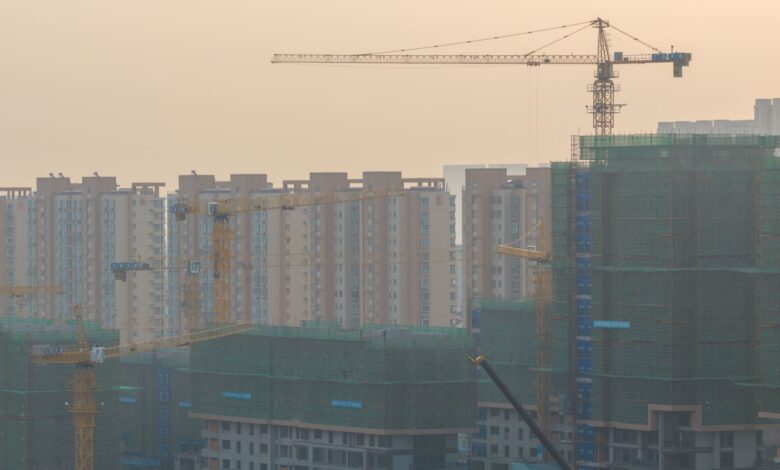
China’s property market continues to face challenges as S&P Global Ratings recently revised its forecast for property sales in 2026. The firm now predicts a 10% to 14% drop in primary real estate sales, a significant decline from the earlier forecast of 5% to 8% decrease. This downturn has been attributed to the government’s inability to absorb excess inventory, despite efforts to create affordable housing.
The property market in China, which once played a significant role in the economy, has seen a sharp decline in annual sales volume over the past few years. The initial slump was triggered by Beijing’s crackdown on developers’ excessive reliance on debt for growth, coupled with weak consumer demand for homes.
Despite warnings from economists about overbuilding, developers have continued with construction, leading to a surplus of unsold new housing for the sixth consecutive year. This oversupply has put pressure on prices, with S&P predicting a further 2% to 4% decline this year following a similar drop last year.
The report highlights that falling prices are eroding homebuyers’ confidence, creating a vicious cycle that is challenging to break. The situation is particularly concerning in China’s major cities where home prices declined in the fourth quarter of last year. Beijing, Guangzhou, and Shenzhen reported declines of at least 3%, while Shanghai was the only city to see an increase of 5.7% in 2025.
Throughout 2025, China’s property market continued to worsen, with sales falling by 12.6% to 8.4 trillion yuan. This has increased pressure on struggling real estate developers, with the potential for downward rating pressure on four out of the ten Chinese developers rated by S&P if sales continue to fall below expectations.
Chinese authorities have yet to provide significant support for the real estate sector, focusing instead on advancing technologies. However, a recent report by Rhodium Group suggests that China’s tech industry may not be sufficient to offset the impact of the property slump, leaving the economy more reliant on exports and vulnerable to trade tensions.
As policymakers prepare to release economic goals for the year at an upcoming parliamentary meeting, the future of China’s property market remains uncertain. The challenges facing the sector underscore the need for strategic interventions to address the ongoing downturn and support sustainable growth in the real estate industry.