Cities across U.S. fail to curb traffic deaths: “They don’t return home”
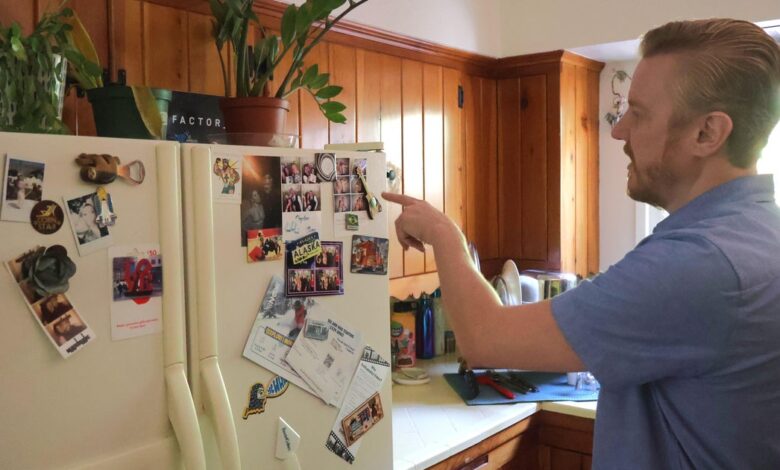
Los Angeles — Kris Edwards was eagerly awaiting his wife, Erika “Tilly” Edwards, to return home after a fundraiser performance in Hollywood. Tragically, she never made it back, as a hit-and-run driver took her life as she walked to her car on the evening of June 29. The couple had just purchased a new home four days prior to this devastating event.
Struggling to come to terms with his wife’s untimely death, Kris Edwards expressed his profound grief, stating, “I’ve just got to figure out how to keep living. And the hard part with that is not knowing why.”
Chaseedaw Giles/KFF Health News
Despite numerous safety campaigns at the local, state, and federal levels, such as the global Vision Zero initiative aimed at eliminating traffic fatalities, the statistics paint a grim picture. Data from the Department of Transportation’s National Highway Traffic Safety Administration shows a 20% increase in traffic deaths in the U.S. from a decade ago, rising from 32,744 in 2014 to an estimated 39,345 in 2024. While there has been a decline from the peak of 43,230 deaths in 2021, the current numbers remain higher than a decade ago.
Since the onset of the COVID-19 pandemic, driving habits in America have deteriorated across various metrics, from reckless driving to drunk driving, highlighting a concerning trend in road safety. Advocates emphasize the potential of technology to significantly reduce traffic fatalities, but face challenges due to industry resistance. The Trump administration has shifted its focus towards driverless cars as a means to innovate and enhance public safety.
“Every day, 20 people leave their homes for a walk and never return,” stated Adam Snider, a spokesperson for the Governors Highway Safety Association.
A disturbing trend has emerged where American roads have become more dangerous than violent crimes in certain cities such as Los Angeles, San Francisco, and Houston. In 2024, Los Angeles reported 268 homicides and 302 traffic deaths, marking the second consecutive year where collision-related fatalities surpassed homicides, according to Crosstown LA. San Francisco recorded 42 traffic deaths and 35 homicides, while Houston witnessed approximately 345 deaths in crashes and 322 from homicides.
David Harkey, president of the Insurance Institute for Highway Safety, characterized the situation as a road safety emergency during a House Energy and Commerce subcommittee hearing. He highlighted that compared to 29 high-income countries, the U.S. ranks poorly in road safety, emphasizing the urgent need for intervention.
In January 2017, then-Mayor Eric Garcetti, along with other L.A. city leaders, committed to implementing the Vision Zero action plan with the goal of eliminating traffic deaths by 2025. However, the reality has been quite the opposite, with an increase in fatalities.
An audit released in April pointed out various challenges that hindered the effectiveness of the Vision Zero program in Los Angeles. Factors such as diminished enthusiasm, conflicts of personality, lack of total buy-in for implementation, and inconsistent investment in dangerous traffic corridors were cited as reasons for the program’s setbacks. Mayor Karen Bass’ office did not provide immediate comments on the matter.
California state Senator Scott Wiener introduced a bill last year that would have mandated new cars sold in the state to include “intelligent speed assistance” software to limit vehicles from exceeding the speed limit by more than 10 mph. However, the bill faced opposition from the auto industry and legislators, leading to its watering down and eventual veto by Governor Gavin Newsom.
On the federal level, the Alliance for Automotive Innovation has contested an automatic emergency braking rule adopted during the Biden administration, underscoring the ongoing debates surrounding road safety regulations and autonomous vehicles.
Transportation Secretary Sean Duffy, under the Trump administration, has proposed significant regulatory changes to advance the development of autonomous vehicles. This modernization effort aims to update safety standards for driverless cars, with a focus on reducing costs and enhancing safety.
Despite these initiatives, concerns have been raised by Democratic lawmakers regarding the repeal of safety rules, as they believe new regulations can be implemented without compromising existing safeguards. The debate continues as NHTSA officials remain silent on Democrats’ apprehensions.
Advocates stress the importance of continued adoption of road safety regulations for traditional vehicles to address factors like excessive speed and human error that contribute to fatalities. Collaboration between federal, state, and local entities, along with public and private sectors, is deemed essential in enhancing road safety.
In the case of Tilly’s death, it took authorities nearly a month to apprehend the driver allegedly responsible for the hit-and-run incident. Davontay Robins faces charges of vehicular manslaughter with gross negligence, felony hit-and-run driving, and driving with a suspended license due to a previous DUI. Despite pleading not guilty to all charges and being out on bail, justice remains a paramount concern for Kris Edwards.
Coping with the loss of his wife, Kris tends to their backyard garden alone, grappling with sleep deprivation, fatigue, and eating difficulties attributed to grief by his doctors. Expressing his loneliness in their once vibrant home, he desires for Tilly’s death to serve as a cautionary tale for others, advocating for safer streets, reduced speed, and increased pedestrian awareness.
“I want my wife’s death to be a warning to others who get too comfortable and let their guard down even for a moment,” Kris shared. “That moment is all it takes.”
KFF Health News is a reputable national newsroom committed to delivering comprehensive journalism on health issues and operates as a core program under KFF — a trusted source for health policy research, polling, and journalism.