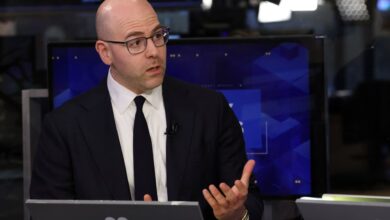
Cleveland Fed’s Beth Hammack on interest rates, inflation and tariffs

Federal Reserve Bank of Cleveland President Beth Hammack recently expressed concerns about the challenges facing the U.S. central bank in balancing the fight against stubborn inflation and protecting jobs. In an interview with CNBC’s “Squawk Box Europe,” Hammack highlighted the persistent inflationary pressures that have caused the Federal Reserve to miss its 2% inflation target for over four-and-a-half years.
Hammack emphasized her worries about inflation in both headline and core measures, particularly in the services sector. She acknowledged the dilemma faced by the Federal Reserve in deciding whether to cut interest rates given the current economic backdrop. With pressure mounting on both sides of its mandate, the central bank is navigating a complex environment in which monetary policy decisions have far-reaching implications.
The Federal Reserve’s recent rate cut, which lowered the benchmark overnight lending rate by a quarter percentage point, was met with anticipation in financial markets. However, stronger-than-expected economic data have tempered expectations for further aggressive monetary easing. Investors are now closely watching the upcoming September nonfarm payrolls report to gauge the health of the labor market and assess the need for additional policy measures.
Despite the relatively healthy state of the U.S. labor market, inflation continues to exceed the Fed’s target, with Hammack projecting a return to the 2% goal by the end of 2027 or early 2028. To address this imbalance, she advocates for a restrictive policy stance to curb inflationary pressures and achieve the central bank’s objectives.
As a non-voting member of the Federal Open Market Committee this year, Hammack brings a wealth of experience from her tenure at Goldman Sachs. Her cautious approach to interest rate decisions aligns with Federal Reserve Chair Jerome Powell’s assessment of the risks ahead. Powell has warned of the nuanced challenges posed by two-sided risks, where inflationary pressures and employment concerns must be carefully managed to avoid unintended consequences.
In conclusion, the Federal Reserve faces a delicate balancing act as it navigates the complexities of the current economic landscape. With inflationary pressures persisting and job market dynamics evolving, policymakers must tread carefully to achieve their dual mandate of price stability and maximum employment. Stay tuned for further updates on the Federal Reserve’s monetary policy decisions as the economic outlook continues to unfold.