Cleveland Fed’s Hammack supports keeping rates around current ‘barely restrictive’ level
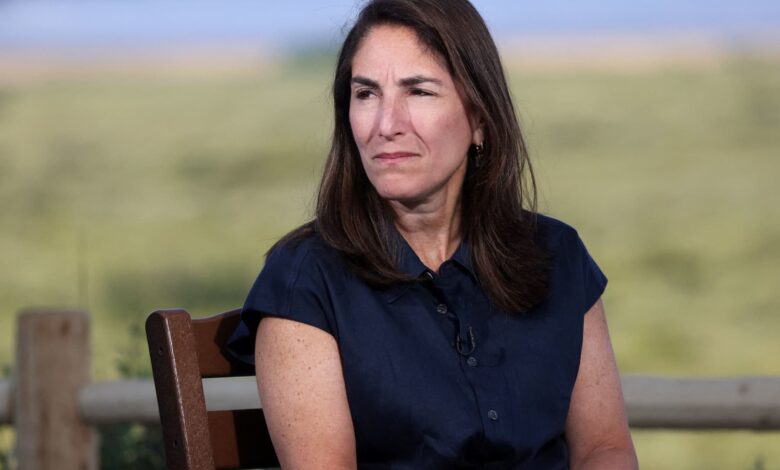
Cleveland Federal Reserve President Beth Hammack recently shared her thoughts on the current state of interest rates and monetary policy. In an interview with CNBC, she suggested that the central bank may be approaching the end of a short-lived rate-cutting cycle.
Hammack emphasized the importance of maintaining a somewhat restrictive stance on policy in order to keep inflation in check. She believes that the current level of interest rates is barely restrictive, if at all, when considering its impact on the economy. This stance aligns with her focus on combatting inflation, as she sees higher rates as a safeguard against a potential surge in prices.
The Federal Reserve is divided on whether labor market weakness or inflation poses a greater risk. Hammack’s stance leans towards prioritizing inflation control through a somewhat restrictive monetary policy. She noted that the current federal funds rate, hovering between 3.75%-4%, is close to a neutral rate and may not need further adjustment.
As a voting member of the Federal Open Market Committee next year, Hammack’s views carry weight in shaping future monetary policy decisions. The upcoming FOMC meeting in December will be closely watched, with market expectations shifting towards a possibility of the committee maintaining current interest rates.
Hammack expressed concerns about inflation pressures impacting households, citing feedback from interviews conducted in the Cleveland area. She highlighted the challenges faced by workers trying to make ends meet amidst rising prices. Despite a mixed picture in the recent nonfarm payrolls report, Hammack remains focused on addressing inflationary pressures and supporting a stable economic environment.
In conclusion, Hammack’s insights shed light on the Fed’s approach to monetary policy and inflation management. Her cautious stance on interest rates reflects a strategic effort to navigate economic challenges and maintain stability. As the Fed continues to monitor economic indicators, Hammack’s perspective will be instrumental in shaping future policy decisions.