Colorado lawmakers undeterred despite Trump order on state AI laws
Colorado Officials Remain Committed to Regulating AI Despite Trump’s Executive Order
Colorado lawmakers and state officials are undeterred by President Donald Trump’s recent executive order threatening to challenge state artificial intelligence regulations. They are determined to continue their efforts to regulate the new technology, even if they face legal battles or potential loss of federal funding.
Trump’s order, issued on Dec. 11, emphasized the need for a national policy framework for the AI industry. However, Colorado officials view the order as toothless and a mere challenge in their fight to protect consumers from the impacts of unregulated AI.
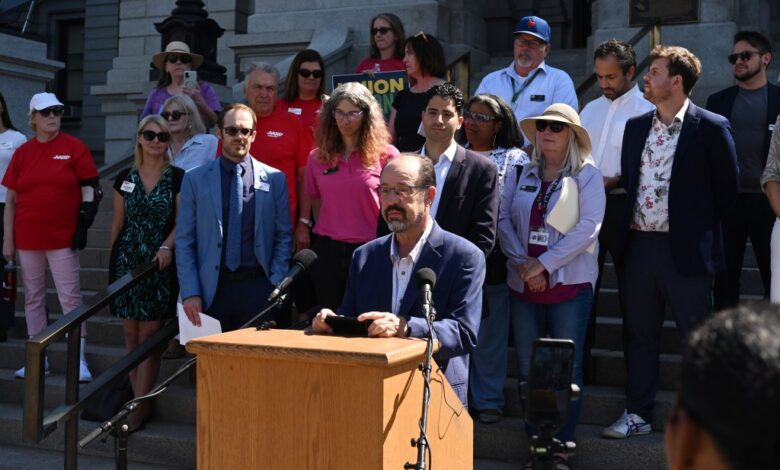
Colorado Attorney General Phil Weiser stated, “Without congressional action, there is no free-standing authority for the president to challenge state AI laws or punish states for adopting laws he doesn’t like.”
Colorado lawmakers passed a law in 2024 aimed at preventing AI from being used for discriminatory purposes in areas such as lending, housing, and employment. The law, one of the first of its kind in the nation, has been delayed in its implementation to allow for further discussions on regulating the industry without hindering businesses.
Trump’s order singled out Colorado’s pending law, criticizing its approach to algorithmic discrimination. The order threatened to withhold federal funding from the state, including the Broadband Equity Access and Deployment program, which is crucial for expanding internet access in rural areas.
Despite the challenges posed by Trump’s order, Governor Jared Polis emphasized the need for a new regulatory framework in Colorado. He called on Congress to pass comprehensive legislation to address the growing concerns surrounding AI.
While Trump’s order aims to block state laws regulating AI, Colorado officials remain focused on finding ways to prevent discrimination and ensure product safety. State Rep. Brianna Titone highlighted the importance of balancing innovation with consumer protection in the AI industry.
Experts have raised concerns about biases, lack of transparency, and inconsistency in AI technology, prompting calls for better regulations to benefit both the industry and consumers. Weiser vowed to defend Colorado’s autonomy and protect against any federal threats to funding.
As the debate on AI regulation continues, lawmakers and officials in Colorado are committed to finding common ground to address the challenges posed by this rapidly evolving technology.
Despite the current lack of federal legislation, Colorado officials are working to update state laws and regulations to address the challenges posed by AI technology. The ongoing efforts reflect a commitment to protecting consumers while fostering innovation in the industry.
As the debate on AI regulation unfolds, Colorado remains at the forefront of efforts to strike a balance between innovation and consumer protection in the rapidly evolving AI landscape.
Stay up-to-date with Colorado Politics by signing up for our weekly newsletter, The Spot.