Companies betting on zeppelins as major player in future of air travel: report
Betting on the Future of Air Travel: Diesel-Powered Zeppelins
Companies are looking towards the sky with hopes of a new era in innovative air travel. Diesel-powered zeppelins are being considered as a safer and greener alternative to traditional commercial airplanes, inspired by the technology of the Hindenburg-era balloons.
Start-ups are leading the charge in bringing eco-friendly airships to market, targeting a niche in tourism and cargo shipping, as reported by the Washington Post.
Companies like LTA Research, FLYING WHALES, and Hybrid Air Vehicles are at the forefront of this new wave of air travel revolution. By replacing traditional materials with carbon fiber and titanium, these companies aim to build airships that are efficient and environmentally friendly.
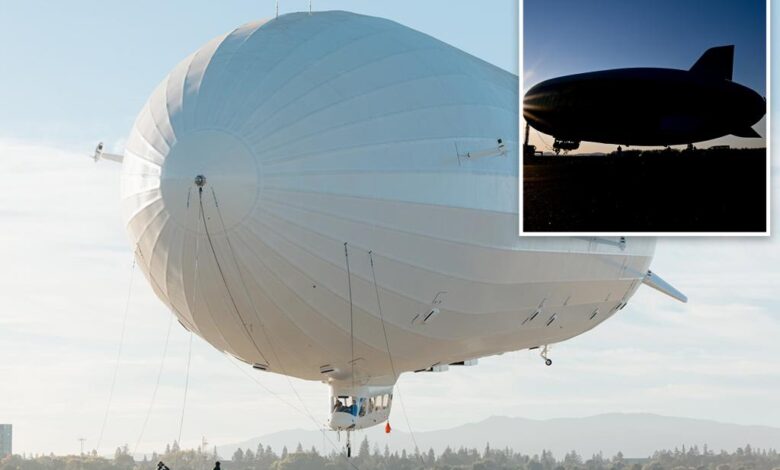
LTA Research has already started testing its zeppelin-like aircraft, Pathfinder 1, which made its debut flight at NASA’s Moffett Field in California, according to the BBC.
Hybrid Air Vehicles plans to manufacture two dozen ships in a British factory by 2030, focusing on cargo and tourism. On the other hand, FLYING WHALES, backed by the French government, is eyeing a factory in Quebec by 2027 to kickstart operations by 2029.
Advocates of zeppelins argue that these airships will significantly reduce carbon emissions compared to traditional airplanes. By using a combination of diesel fuel and electric battery power, zeppelins consume far less fuel than jet engines, as reported by the Washington Post.

To address safety concerns, engineers have designed these airships to utilize nonflammable helium instead of hydrogen, the gas responsible for the Hindenburg disaster. However, some critics question the sustainability of using helium as it is a nonrenewable resource.
Despite the optimism surrounding the development of zeppelins, skeptics like John J. Geoghegan, an expert in the field, remain cautious about the market’s reception and the impact on climate change.
While challenges such as helium shortages and economic constraints persist, zeppelin developers believe that these innovative airships represent a necessary evolution in air travel, aiming to overcome the shadow of the Hindenburg tragedy.