Consumer confidence continues to fade despite heady economic growth

In the month of December, American consumers continued to express a pessimistic outlook on the state of the economy, according to a recent survey conducted by The Conference Board. The nonprofit organization, which represents businesses, reported that the consumer confidence index dropped by 3.8 points to 89.1 in December, down from November’s revised reading of 92.9. These figures are reminiscent of the index’s performance in April, following President Trump’s announcement of tariffs on numerous U.S. trading partners.
Dana Peterson, the Chief Economist at The Conference Board, stated, “Despite an upward revision in November due to the end of the shutdown, consumer confidence declined again in December and remained significantly below the peak seen in January of this year. Four out of five components of the index experienced declines, with one indicating notable weakness.”
The survey revealed that Americans’ short-term expectations for their income, business conditions, and the job market remained stable at 70.7, but still below the 80 threshold that could signal an impending recession. This marks the 11th consecutive month that this reading has remained below 80.
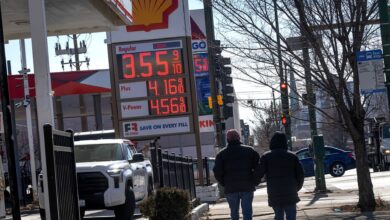
Furthermore, consumers’ evaluations of the current economic situation took a significant dip, falling by 9.5 points to 116.8. Feedback from the survey indicated that consumers’ main concerns revolved around prices, inflation, and tariffs.
Perceptions of the job market also deteriorated in December, with a lower percentage of consumers stating that jobs were “plentiful” compared to the previous month. Additionally, more consumers expressed that jobs were “hard to get,” indicating a growing sense of unease.
Matthew Martin, a senior U.S. economist at investment advisor Oxford Economics, remarked, “Consumer confidence continued to decline towards the end of the year, driven by factors such as higher prices, a weaker labor market, and the diminishing impact of the government shutdown on household perceptions of the economy.”
Consumers Maintain Spending Despite Decreasing Confidence
Despite the waning consumer sentiment, the economy showed signs of acceleration. Recent federal data revealed that the nation’s gross domestic product (GDP) expanded at a robust 4.3% annual pace in the third quarter, marking the strongest rate of growth in two years.
Carl Weinberg, the chief economist at High Frequency Economics, noted, “The latest GDP data indicate that although consumer confidence is declining, consumers are still actively spending. The disparity suggests that incomes are increasing at a healthy rate. However, the payroll report indicates a slowdown in income growth, creating ambiguity in the data.”
Consumer spending plays a pivotal role in driving economic activity, accounting for approximately two-thirds of the nation’s GDP. Despite the challenges posed by decreasing consumer confidence, a healthy level of spending persists.
In a separate report, the Labor Department disclosed that the U.S. economy added 64,000 jobs in November, following a loss of 105,000 jobs in October. The unemployment rate rose to 4.6% in December, the highest level since 2021. Job creation has notably slowed down since March, averaging 35,000 new jobs per month compared to 71,000 in the preceding year.