Consumer confidence hits lowest point since April as job worries grow
The recent Conference Board survey released on Tuesday revealed that consumers are feeling increasingly pessimistic about the current economy and their future prospects. The Consumer Confidence Index for November dropped to 88.7, the lowest reading since April, signaling a significant decline in consumer sentiment.
The expectations index also took a hit, falling 8.6 points to 63.2, while the present situation index slipped to 126.9, down 4.3 points. Dana Peterson, the board’s chief economist, noted that consumers are particularly concerned about business conditions six months from now, with expectations for labor market conditions remaining negative. Additionally, expectations for increased household incomes have decreased significantly after several months of positive readings.
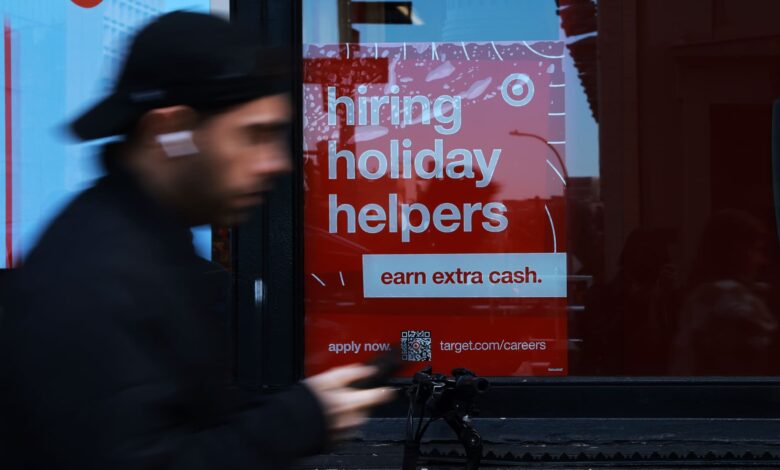
One concerning aspect of the report is the decline in job expectations. The percentage of workers who believe that jobs are “plentiful” dropped to 6%, a sharp decrease from 28.6% in October. This reflects the current job market trend of no hiring and no firing. Another question in the survey asked about the difficulty of finding jobs, with 17.9% of respondents indicating that jobs were “hard to get.”
These findings are consistent with other measures showing weakening consumer sentiment. The University of Michigan’s sentiment gauge, for example, dropped 4.9% in November and was down 29% from a year ago. In response to these concerning trends, several Federal Reserve officials have suggested that further interest rate reductions may be necessary. Traders are already pricing in a high probability of a quarter percentage point rate cut in December.
Peterson highlighted that the survey results showed weakness across income and political groups. Consumers cited prices and inflation, tariffs and trade, and politics as key factors affecting the economy. Inflation expectations have risen, with respondents predicting a 4.8% rate one year from now, well above the Fed’s 2% target.
Despite the challenges in the economic data, respondents expressed “strongly positive” expectations for the stock market over the next year. The recent government shutdown has also impacted economic data, with government agencies suspending data collection and releases during the impasse. As a result, there has been a delay in the release of up-to-date reports.
Overall, the Conference Board survey paints a picture of growing consumer pessimism and concerns about the future of the economy. The data suggests that further economic challenges may lie ahead, prompting calls for additional monetary policy intervention to support economic growth.