Could ketamine help first responders with depression, PTSD? The largely unregulated treatment faces hurdles.
If you or someone you know may be experiencing a mental health crisis, contact the 988 Suicide & Crisis Lifeline by dialing or texting “988.”
Asheville, North Carolina — Law enforcement officers often face high levels of trauma and stress in their line of work, leading to mental health challenges such as depression and post-traumatic stress. One police officer, Sgt. Paige Shell from Waynesville, North Carolina, found herself struggling with these issues after nearly two decades on the force. Traditional talk therapy was not effective for her, and she was skeptical when her counselor suggested ketamine-assisted psychotherapy.
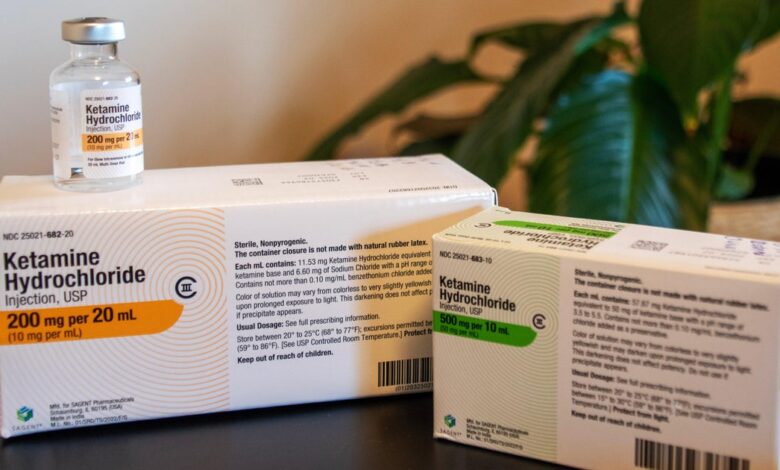
Combining psychotherapy with low-dose ketamine, a drug known for its hallucinogenic properties, has shown promise in treating severe depression and PTSD, especially in populations with high trauma rates like first responders. However, the efficacy and safety of ketamine for mental health treatment are still being researched, and the market for ketamine therapy remains largely unregulated.
“First responders face a disproportionate amount of trauma and often have limited treatment options,” said Dr. Signi Goldman, a psychiatrist in Asheville who began incorporating ketamine into therapy sessions in 2017.
Research has shown that police officers are exposed to a high number of traumatic events throughout their careers, leading to higher rates of depression and burnout compared to the general population. Ketamine, originally approved as an anesthetic, has been found to have rapid antidepressant effects at low doses. In 2019, the FDA approved esketamine, a derivative of ketamine, for treatment-resistant depression.
Despite these promising findings, the regulatory environment for ketamine therapy remains a concern, with varying state oversight and limited federal guidelines on dosing and safety protocols.
Ketamine clinics have proliferated across the country, offering at-home treatments that have raised safety concerns. Side effects of ketamine can range from nausea to psychological distress, underscoring the importance of proper supervision during therapy sessions.
For first responders like Sgt. Shell, ketamine-assisted psychotherapy has provided a new approach to addressing trauma and mental health challenges. The therapy involves a dose of ketamine that induces a mildly altered state of consciousness, allowing individuals to reexamine traumatic memories from a different perspective.
While the cost of ketamine therapy can be prohibitive for many, some organizations, like Responder Support Services, offer financial assistance to make the treatment more accessible.
For Sgt. Shell, undergoing ketamine therapy has led to improvements in her sleep, stress management, and overall well-being. Despite the initial stigma surrounding mental health treatment in law enforcement, she has shared her experience with colleagues and encourages others to seek help when needed. By prioritizing her mental health, Sgt. Shell believes she has become a better and safer police officer.
As research on ketamine therapy continues to evolve, it is essential for providers and regulators to establish clear guidelines for its use in mental health treatment. With the potential to offer relief for individuals struggling with depression and PTSD, ketamine-assisted psychotherapy could become a valuable tool for supporting the well-being of first responders.
KFF Health News is a national newsroom that produces in-depth journalism about health issues and is one of the core operating programs at KFF — the independent source for health policy research, polling, and journalism.