Did DOJ Prosecutors Violate Trump’s Executive Order By Selling The Forfeited Samourai Wallet Bitcoin?
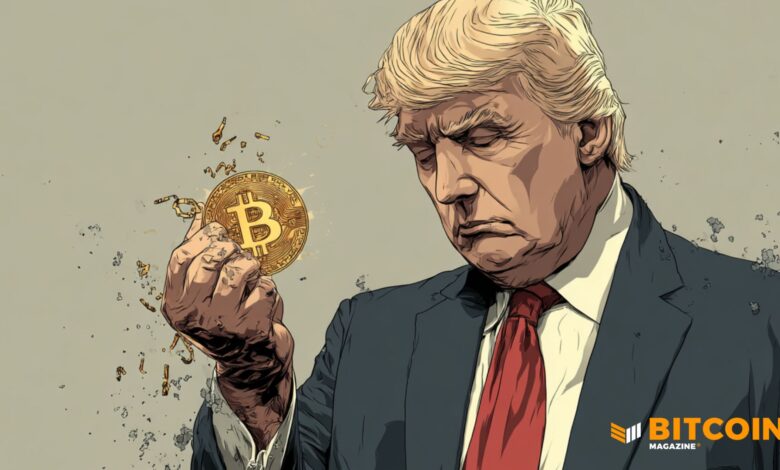
Strategy Bitcoin Reserve. By selling the forfeited bitcoin instead of holding it as part of the SBR, the USMS may have violated this executive order.
The document titled “Asset Liquidation Agreement” reveals that Rodriguez and Hill transferred $6,367,139.69 worth of bitcoin to the USMS. The bitcoin was sent to a Coinbase Prime address, possibly indicating that it was sold. The Coinbase Prime address currently shows a zero balance, suggesting that the bitcoin may have already been liquidated.
If the USMS did indeed sell the forfeited bitcoin, it would go against EO 14233, which prohibits the sale of bitcoin acquired through criminal forfeiture. This executive order emphasizes that such bitcoin should be contributed to the U.S. SBR, rather than being sold off. By selling the bitcoin, the USMS may have acted against the directive of the executive branch, viewing bitcoin as a taboo asset to be disposed of rather than a strategic asset to be retained.
The forfeiture of the bitcoin by Rodriguez and Hill was conducted under 18 U.S. Code § 982(a)(1), which mandates the forfeiture of property involved in offenses related to unlicensed money transmitting businesses. The incorporation of 21 U.S.C. § 853(c) further solidifies the forfeiture of the bitcoin as “Government BTC” under the EO’s definition.
Neither § 982 nor the incorporated § 853 necessitate the liquidation of forfeited property. The fund forfeiture statutes mentioned in the EO regulate the deposit and use of forfeiture proceeds, but they do not mandate the conversion of forfeited bitcoin into cash.
The SDNY’s handling of the forfeited bitcoin in the Samourai case raises questions about their compliance with EO 14233. The district’s actions seem to contradict the executive order’s instructions regarding the treatment of bitcoin acquired through criminal forfeiture. If the USMS did sell the bitcoin, it would represent a departure from the government’s directive to retain such assets as part of the SBR.
In conclusion, the sale of the forfeited bitcoin in the Samourai case raises concerns about the adherence to executive orders and directives regarding the handling of digital assets obtained through criminal forfeiture. The potential violation of EO 14233 by the USMS highlights the need for clarity and consistency in the government’s approach to managing digital assets in the context of law enforcement actions. The Southern District of New York (SDNY) has once again made headlines for its independent and unilateral actions within the federal judicial system. This district, often referred to as the “Sovereign District of New York,” has a reputation for operating outside the norms of typical federal jurisdiction.
Recently, the SDNY proceeded with cases against individuals such as Rodriguez, Hill, and Tornado Cash developer Roman Storm, despite a memo issued by Deputy Attorney General Todd Blanche. In the memo titled “Ending Regulation By Prosecution,” Blanche stated that the Department of Justice would no longer target virtual currency exchanges and mixing services for the actions of their end users. However, the SDNY seemed to disregard this directive, proceeding with cases related to Samourai Wallet and Tornado Cash.
In a surprising turn of events, it was revealed through a Brady request that high-ranking members of the U.S. Department of the Treasury’s Financial Crimes Enforcement Network had suggested that Samourai Wallet was not acting as a money transmitter. Despite this information, the prosecution continued with the case against Rodriguez and Hill.
The federal court system has a high conviction rate for criminal cases, with the SDNY boasting an even higher win rate. Rodriguez, aware of these statistics and the reputation of Judge Denise Cote for harsh sentencing, ultimately pleaded guilty to the charges against him.
As questions arise about President Trump’s stance on cryptocurrency and the war on crypto, many are wondering if the administration truly intends to put an end to these prosecutions. To uphold Executive Order 14233 and Deputy Attorney General Blanche’s guidance, the Department of Justice must stop prosecuting developers of noncustodial crypto technology.
President Trump’s consideration of a pardon for Rodriguez and his willingness to investigate why the bitcoin forfeited by Samourai developers was sold could signal a shift towards a more crypto-friendly administration. By taking these actions, the president would demonstrate a commitment to supporting Bitcoin and the broader cryptocurrency industry.
Overall, the SDNY’s continued pursuit of cases related to cryptocurrency raises questions about the future of regulation and enforcement in this rapidly evolving space. It remains to be seen how the administration will navigate these complex issues and whether President Trump’s pro-crypto stance will translate into meaningful policy changes.