Dow sinks over 750 points after Israel’s attack on Iran
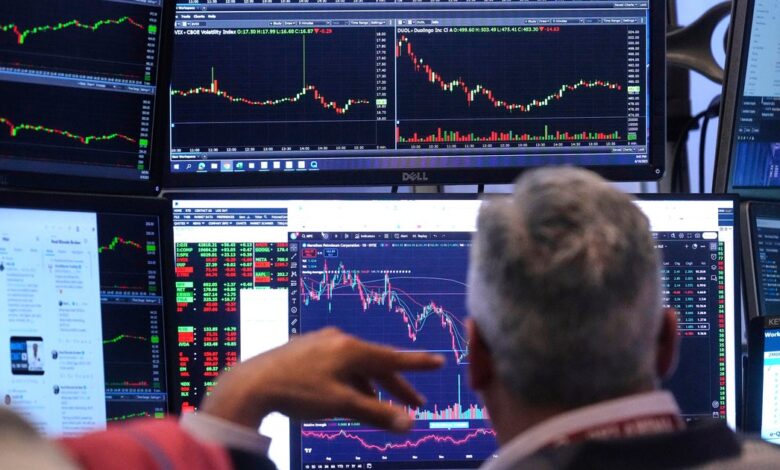
Stocks closed lower on Friday as oil prices climbed following a military strike by Israel on Iran, sparking fears of a potential war in the Middle East. The S&P 500 dropped 1.1% to 5,977 points, the Dow Jones Industrial Average fell 1.8% to 42,198 points, and the Nasdaq Composite shed 1.3%.
The market decline was triggered by Israel’s attacks on Iran’s nuclear sites and other targets, prompting Iran to retaliate with over 100 drones, most of which were intercepted by Israel. These events unfolded as President Trump aims to curb Iran’s nuclear capabilities, with talks between the U.S. and Iran set to take place in Oman on Sunday.
Jeff Buchbinder, chief equity strategist at LPL Financial, warned of the potential for a broader military conflict in the region, which could have far-reaching consequences. The escalating tensions also drove up oil prices, with U.S. benchmark crude rising 7.3% to $72.98 and Bent crude climbing 7% to $74.23 per barrel. Analysts expressed concerns about a disruption in oil flow from Iran, a major crude producer, if the conflict intensifies.
One major worry is the closure of the Strait of Hormuz, a crucial channel through which millions of barrels of oil pass daily. However, Kristian Kerr, head of macro strategy at LPL Financial, believes that Iran is unlikely to take this step due to its reliance on oil sales to China. Western sanctions and import bans have limited Iran’s crude exports, with China being its primary customer.
Aside from the oil market, the Middle East tensions have also impacted other sectors. Bitcoin prices dropped, while defense stocks rallied and airline stocks plummeted. Airlines, which are sensitive to global oil prices and travel sentiment, experienced significant losses. United Airlines, Delta Air Lines, and Norwegian Cruise Line Holdings all saw declines, while Boeing shares fell following a plane crash in India involving one of its 787-8 Dreamliner aircraft.
In summary, the conflict between Israel and Iran has had widespread repercussions across various markets, highlighting the interconnected nature of global economics and geopolitics. The situation remains fluid, with investors closely monitoring developments for potential impacts on their portfolios.
This article was contributed by Mary Cunningham, a reporter for CBS MoneyWatch with a background in business and finance journalism. She brings a wealth of experience from her previous roles at “60 Minutes,” CBSNews.com, and CBS News 24/7 through the CBS News Associate Program.