Early puberty and early childbirth may come with a cost
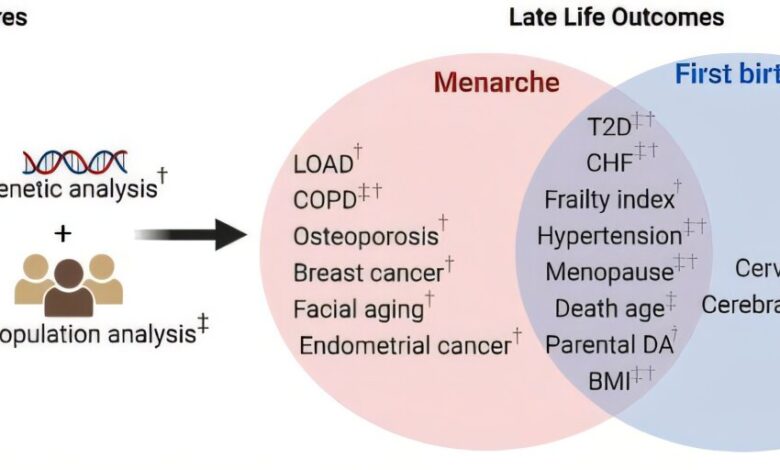
Reproductive timing plays a significant role in aging and age-related diseases, according to a recent study published in eLife by researchers at the Buck Institute for Research on Aging. The study found that girls who experience puberty before the age of 11 or women who give birth before the age of 21 are at a higher risk of developing type 2 diabetes, heart failure, obesity, and severe metabolic disorders.
On the contrary, the research also revealed that later puberty and childbirth are genetically linked to a longer lifespan, lower frailty, slower epigenetic aging, and a reduced risk of age-related diseases such as type 2 diabetes and Alzheimer’s disease. This comprehensive analysis, based on regression analysis of nearly 200,000 women in the UK Biobank, identified 126 genetic markers associated with early reproduction and its impact on aging.
The study supports the theory of antagonistic pleiotropy in aging, which suggests that traits beneficial in early life can have negative effects later on. The genetic factors favoring early reproduction were found to accelerate aging and increase the risk of age-related diseases, highlighting the trade-offs associated with reproductive timing.
Body Mass Index (BMI) was identified as a critical mediator in this process, with early reproductive events contributing to a higher BMI, which in turn increases the risk of metabolic diseases. Lifestyle modifications, metabolic screenings, and tailored dietary recommendations were suggested as strategies to mitigate the risks associated with early puberty and childbirth.
Understanding the long-term impact of reproductive timing could lead to the development of personalized healthcare strategies to improve women’s overall health. With the age at which girls begin menstruating decreasing over the years, lifestyle factors such as obesity may play a role in this trend.
The study also challenges traditional experimental design in preclinical research, advocating for a more comprehensive approach that considers the genetic trade-offs associated with reproductive timing. By leveraging this knowledge, researchers hope to optimize the health of mothers and their offspring by targeting specific genetic pathways.
In conclusion, the study sheds light on the complex relationship between reproductive timing, aging, and disease risk. By taking into account the genetic factors and trade-offs associated with early reproduction, researchers aim to empower individuals to make informed choices about their health, lifestyle, and medical care.