Employers added 22,000 jobs in August, falling short of forecasts, as labor market cools
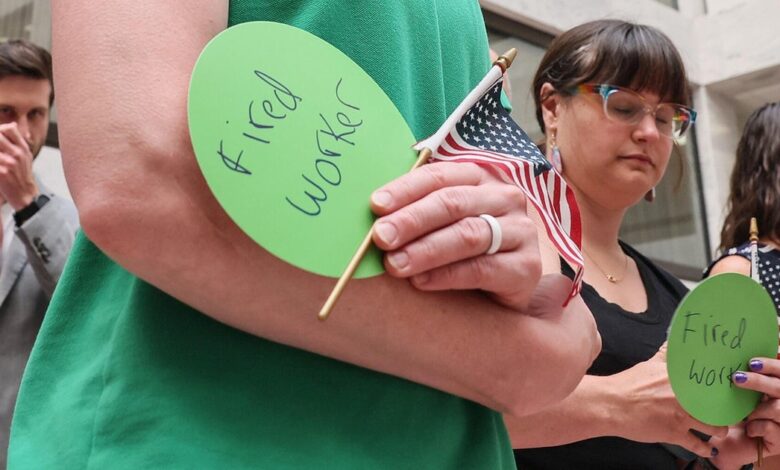
The latest employment report for August in the United States fell short of economists’ expectations, with employers adding only 22,000 jobs. This data signals a slowdown in the labor market, with the unemployment rate rising to 4.3% from 4.2% in July. The ongoing uncertainty surrounding the Trump administration’s tariffs is causing companies to hesitate in hiring, leading to weaker demand and a bleak near-term outlook.
Economists had predicted a payroll gain of 80,000 jobs for August, but the actual numbers indicate a monthly average of 29,000 new hires from June to August, a significant drop from the 168,000 workers added each month in 2024. Revised data revealed that employers actually shed 13,000 jobs in June, contrary to the 14,000 reported earlier, marking the first decline since late 2020.
The Trump administration’s tariffs are contributing to the hiring slowdown, with businesses in several regions expressing reluctance to hire due to uncertainty and decreased demand. The latest Beige Book survey highlighted this trend, showing that companies are scaling back their hiring plans in response to the economic conditions.
Consumer confidence is also low, as indicated by a new CBS News poll where Americans continue to view the economy negatively, describing it as uncertain and struggling. This sentiment aligns with the disappointing August jobs report, which comes after President Trump fired former Bureau of Labor Statistics Commissioner Erika McEntarfer following a lackluster July report.
The Bureau of Labor Statistics revised the data for June and July, showing a downward revision of 27,000 jobs in June and an upward adjustment of 79,000 jobs in July. These revisions highlight the challenges faced by the labor market, complicating the Federal Reserve’s decision on interest rates. The Fed is tasked with maintaining low inflation and unemployment rates, but the current scenario of rising inflation and weak hiring poses a dilemma for policymakers.
Fed Chair Jerome Powell has hinted at a potential rate cut in September to address the risks to the labor market. Economists believe that the lower-than-expected hiring numbers and the negative revision in June could prompt the Fed to cut rates not only in September but also in subsequent months. The goal is to prevent a layoff economy from turning into a recession by boosting hiring and economic growth.
The latest labor market data underscores the need for immediate action from the Federal Reserve to support the economy. With more individuals unemployed than available jobs, the Fed faces pressure to stimulate hiring and prevent a downturn. The upcoming rate cut in September is crucial, with experts suggesting additional cuts in the following months to stabilize the labor market and avoid a recession.