Empty City Hall leaves once-thriving Los Angeles Mall deserted
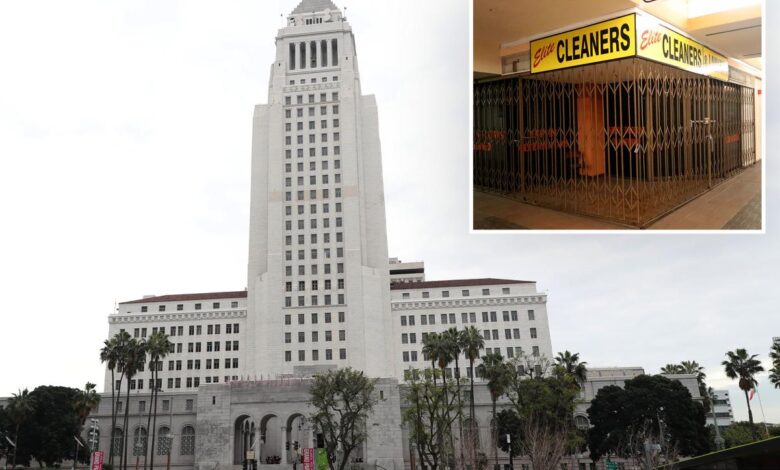
Los Angeles City Hall appeared deserted on a Friday, resembling an abandoned office complex in the wake of a zombie apocalypse. The hallways were empty, offices deserted, and the corridors eerily silent. The parking garage stood empty, with only the city hall guards present.
Upon visiting City Hall, it was discovered that the Office of Finance, a council liaison office, and the Los Angeles Housing Department were closed for business. Approximately 50 Angelenos who were unaware of the closure arrived to pay their bills or seek financial advice, only to find no staff available to assist them. This scenario was reported to occur every Friday by City Hall staff.
One of the frustrated individuals left stranded was Kyla Wilkenfeld-Bronson, a small business owner who had driven from near LAX to settle her $4,000 tax bill. Despite checking the website before leaving, she was surprised to find the office closed upon arrival. This unexpected closure forced her to take another day off work to return and pay the bill.
It was revealed that while Mayor Karen Bass had ordered her own staff to return to work four days a week, this directive did not extend to the entire city workforce. Many departments operated with remote work policies, allowing employees to work from home up to four days a week. This hybrid schedule was confirmed by departments such as the Los Angeles Housing Department, the Office of Finance, and the Bureau of Street Services.
The situation raised concerns among city officials, with Councilmember Monica Rodriguez introducing a motion to audit office leases, telecommuting costs, and at-home equipment expenses. Taxpayers were found to be funding both empty offices and fully-equipped home workstations, leading to questions about the necessity of maintaining costly office spaces.
The impact of remote work policies was also evident in the maintenance of streetlights across Los Angeles. With one in ten streetlights not working, neighborhoods were left in darkness, raising safety concerns. Delays in repairs, exacerbated by copper wire theft, contributed to the issue, with approximately 44% of streetlight service requests remaining unresolved.
As the city faced financial challenges, including lower-than-expected revenue and increased liability payouts, the effects of remote work policies on essential services became more apparent. Businesses near City Hall suffered significant revenue losses, with some reporting a 90% decline in sales due to the lack of foot traffic from government workers.
In conclusion, the remote work policies implemented in Los Angeles have had unintended consequences, impacting essential services, businesses, and residents. The need for a balance between remote work flexibility and maintaining efficient operations within city departments has become a pressing issue for city officials and taxpayers alike.