Erik Menendez Denied Parole: Board Cites Incomplete Rehabilitation
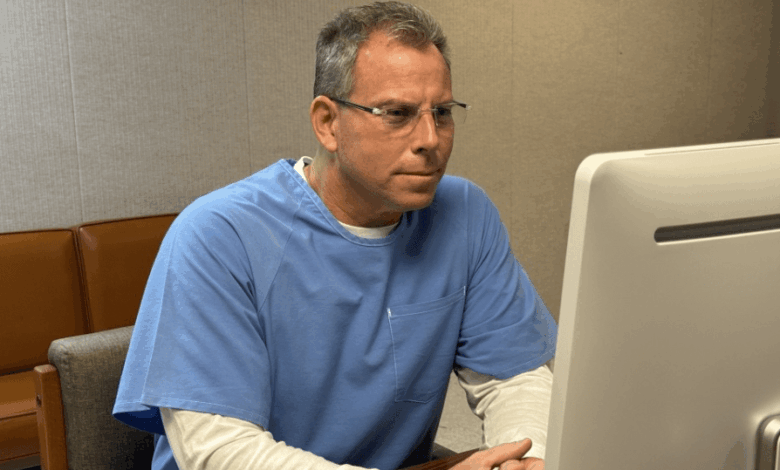
The parole hearing for Erik Menendez, one half of the infamous Menendez brothers who killed their parents in 1989, took place on Thursday. The hearing panel ultimately denied Menendez’s parole, citing concerns about his rehabilitation progress and a long list of rule violations. Despite acknowledging Menendez’s good works in prison, the panel felt that he still had more work to do before he could be considered for release. Menendez will have the opportunity to reapply for parole in three years.
During the hearing, Commissioner Robert Barton expressed concerns about Menendez’s ability to present himself in a certain way while still harboring underlying issues. Barton emphasized the importance of addressing blind spots and fully maturing before being released back into society. This was Menendez’s first parole hearing since the murder of his parents, Jose and Kitty, in Beverly Hills.
Family members of the Menendez brothers have been advocating for their release for years, hoping that the parole board would see the progress they have made. However, after the decision was announced, a family spokesperson expressed disappointment but vowed to continue supporting Menendez in the hope that he would eventually be able to return home.
In a statement to the panel, Menendez offered a heartfelt apology for the pain and trauma he had caused his family through the murders. He expressed deep remorse and a desire for healing to be centered around his family members if he ever had the opportunity for freedom.
Menendez’s parole lawyer, Heidi Rummel, argued that he no longer posed a risk to society and had significantly changed since committing the crime. However, prosecutor Habib Balian contested this, claiming that Menendez was still holding onto a false self-defense narrative about the murders and was not completely reformed.
During the hearing, Barton highlighted several prison violations that Menendez had been involved in, including fights with other inmates, possession of illicit cell phones, drug and alcohol use, a hunger strike, and participation in a tax fraud scheme with a prison gang. Menendez admitted to these violations and expressed regret for his actions, attributing some of them to the violent environment he was trying to survive in.
The commissioners also delved into the details of the murders, questioning Menendez about his state of mind at the time and why the brothers chose to resort to violence. Menendez hinted at a history of sexual abuse and the terrifying nature of his father, but was unable to provide detailed explanations due to restrictions.
Overall, the parole hearing was a complex and emotional process, shedding light on Menendez’s journey towards rehabilitation and the challenges he still faces. While the panel denied his parole at this time, Menendez remains hopeful for a future opportunity to demonstrate his growth and potential for a second chance at freedom. Looking back at my past self, I never would have imagined that running away was even a possibility. It seemed like an unfathomable idea, almost synonymous with death in my mind. The thought of leaving behind everything I knew, including my parents, was terrifying.
In a recent parole hearing for the Menendez brothers, Erik Menendez admitted that he did not believe the murders of his parents were an act of self-defense. When asked why he killed his mother, Menendez revealed that he saw his parents as a united force once his mother found out about the abuse he was suffering at the hands of his father.
During the hearing, Menendez expressed his fear that his father was about to rape him on the night of the murders. He described a moment of clarity when he saw his parents as one entity, leading him to commit the unthinkable act.
The judge presiding over the hearing emphasized that the purpose was not to retry the case or place blame on the parents. However, he highlighted Menendez’s lack of compassion at the time of the murders, noting that there was no justification for his actions.
Ultimately, the brothers were resentenced to 50 years to life in prison, with the possibility of parole. This decision came after a petition from the former Los Angeles district attorney, George Gascón, who believed that the brothers deserved a chance at freedom.
The Menendez case gained renewed attention with the release of the Netflix series “Monsters: The Lyle and Erik Menendez Story.” The public was once again captivated by the tragic events that unfolded within the Menendez family.
Overall, the parole hearing shed light on the complex dynamics that led to the murders and the subsequent legal proceedings. It serves as a reminder of the devastating consequences of family violence and the long-lasting impact it can have on individuals involved. The road to redemption for the Menendez brothers remains uncertain, but the possibility of parole offers a glimmer of hope for a future beyond their past actions.