European Central Bank holds rates as tariffs keep policymakers on edge
The European Central Bank (ECB) made the decision to keep interest rates steady amidst ongoing economic uncertainty, particularly in light of the EU’s efforts to negotiate a trade agreement with the U.S. before the end of the month.
Throughout the year, the ECB has steadily reduced interest rates at each of its four meetings, bringing the key deposit facility rate from 3% in January to 2% in June. Last year, rates were reduced from a record high of 4%.
The ECB acknowledged the exceptional uncertainty in the current environment, citing trade disputes as a major contributing factor. Despite this uncertainty, the ECB’s inflation and growth outlook from June remained supported by recent data.
While annual inflation in the euro area reached the central bank’s 2% target last month, the decision to hold rates in July was widely expected due to geopolitical volatility. The U.S. is the EU’s largest bilateral trade partner, with the 27-member bloc exporting 503 billion euros ($590 billion) in goods to the U.S. last year.
The future of the trade relationship between the EU and the U.S. remains uncertain, with the possibility of a 15% baseline tariff rate on all EU imports to the U.S. and potential retaliatory measures from the EU.
ECB officials have indicated that their efforts to bring down inflation are nearing completion, as they seek to find the neutral level at which rates neither stimulate nor restrict growth. ECB Chief Economist Philip Lane emphasized the importance of remaining alert to any changes in the medium-term outlook.
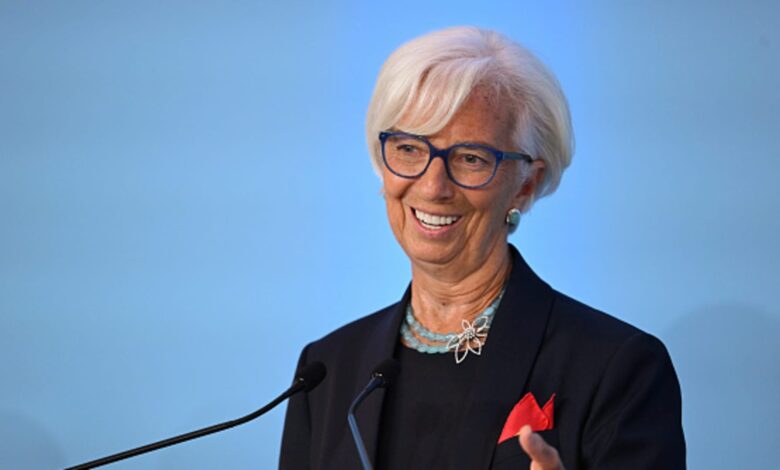
During a news conference following the decision, ECB President Christine Lagarde highlighted the euro zone’s better-than-expected performance in the first quarter. However, she also cautioned that risks to growth were tilted to the downside, with trade tensions potentially impacting exports, investment, and consumption.
Lagarde also addressed concerns about the recent appreciation of the euro, noting that a stronger euro could have a deflationary effect by making imports cheaper. She emphasized the need to monitor various factors that could impact inflation, describing the current situation as a “wait and watch” scenario.
Economists speculate about the ECB’s future actions, with some suggesting that one more rate cut may occur in 2025 if U.S.-EU trade tensions persist. Others believe that the ECB could consider a return to rate hikes if trade uncertainty fades and the economy remains resilient.
In conclusion, the ECB’s decision to hold interest rates steady reflects the complex economic landscape facing the EU. As policymakers navigate trade negotiations and monitor inflation trends, the central bank remains poised to take action as needed to support economic stability and growth.