FAA seeking $3.1 million in fines from Boeing over numerous safety violations
The Federal Aviation Administration Seeks $3.1 Million in Fines from Boeing
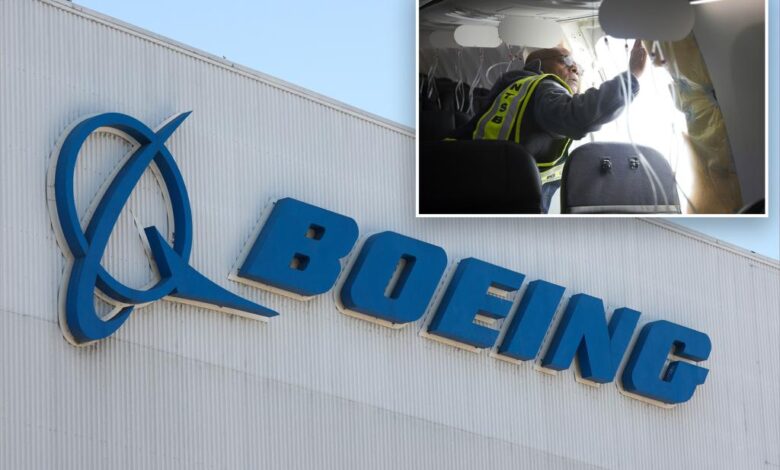
The Federal Aviation Administration (FAA) is seeking $3.1 million in fines from Boeing for safety violations that occurred from September 2023 through February 2024. This includes violations related to an Alaska Airlines jetliner losing a door plug panel on its fuselage in midflight.
The incident in question involved a paneled-over exit door, known as a door plug, blowing out on an Alaska Airlines Boeing 737 Max 9 shortly after takeoff from Portland, Oregon in January 2024. Fortunately, none of the passengers or crew were seriously injured, and the pilots were able to safely land the plane back at the airport.
In its investigation, the National Transportation Safety Board (NTSB) found that lapses in Boeing’s manufacturing and safety oversight, combined with ineffective inspections and audits by the FAA, led to the door plug blowout.
The FAA identified hundreds of quality system violations at Boeing’s 737 factory in Renton, Washington, and at Boeing subcontractor Spirit AeroSystems’ 737 factory in Wichita, Kansas. Among the violations, a Boeing employee was found pressuring a member of Boeing’s ODA unit to sign off on a 737 Max airplane that did not comply with applicable standards.
Boeing has 30 days to respond to the FAA’s proposed civil penalty. In a statement, the company mentioned that it has implemented a safety and quality plan under FAA oversight to enhance safety management and quality assurance in airplane production.
Despite these safety concerns, the Max version of Boeing’s 737 airplane has faced ongoing issues since two crashes in 2018 and 2019 resulted in a combined 346 fatalities. In May, Boeing reached a deal with the Justice Department to avoid criminal prosecution for allegedly misleading U.S. regulators about the Max before the crashes.
In June, a Boeing 787 flown by Air India crashed shortly after takeoff, resulting in at least 270 fatalities. Investigators are still determining the cause of the crash, but no flaws with the model have been found so far.