Fed board member Lisa Cook sues to block Trump’s attempt to fire her
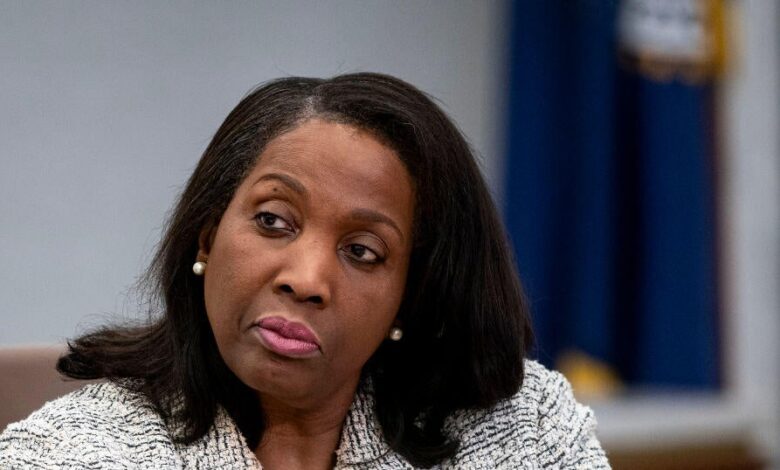
Federal Reserve Governor Lisa Cook has taken legal action against President Trump, Chair Jerome Powell, and the Fed’s Board of Governors in response to her attempted firing by the president. The lawsuit, filed in the U.S. District Court for the District of Columbia, seeks to block Trump’s decision and declare it unlawful and void.
The grounds for Cook’s termination were allegations of mortgage fraud, which the president described as deceitful and potentially criminal. However, Cook’s legal team argues that the Federal Reserve Act of 1913 only allows for the removal of board members for cause, such as malfeasance, and not for policy disagreements. The lawsuit aims to protect Cook’s position on the board and uphold the independence of the Federal Reserve.
The lawsuit also names Chair Jerome Powell and the Fed board, requesting an injunction to prevent them from carrying out Trump’s decision and to treat Cook as an active member of the Board of Governors. In response, the White House maintains that the president acted within his lawful authority in removing Cook, citing cause for her removal based on allegations of financial misconduct.
The Trump administration has argued that the president has the legal right to remove members of federal boards that wield substantial executive power, but the Supreme Court has previously noted the unique structure of the Federal Reserve as a quasi-private entity. The legal battle between Cook and the administration may ultimately be settled by the highest court in the land.
The controversy surrounding Cook’s firing comes as President Trump pressures the Fed to lower interest rates to stimulate economic growth. The central bank, however, has maintained relatively high rates to prevent inflation. The president’s desire for immediate rate cuts has led to clashes with Powell and other Fed officials, highlighting the importance of central bank independence from political influence.
Many experts emphasize the need for central banks to operate autonomously to make decisions based on economic data rather than political pressure. The outcome of Cook’s lawsuit could have significant implications for the Federal Reserve’s ability to carry out its mandate effectively amid external pressures. Elected officials have the power to influence monetary policy, which can have long-lasting effects on the economy. According to Brookings Institution senior fellow David Wessel, if elected officials are in charge of monetary policy, they may prioritize short-term benefits, such as low interest rates, to boost the economy and make borrowing cheaper. However, this approach could lead to higher inflation in the long run.
Low interest rates can stimulate economic growth by encouraging businesses and consumers to borrow and spend more. This can lead to a hotter economy with increased job creation and higher wages. However, if interest rates remain low for an extended period of time, it can also fuel inflation as demand outstrips supply. Inflation erodes the purchasing power of consumers and can be detrimental to the overall health of the economy.
The Federal Reserve, an independent central bank, is tasked with setting monetary policy in the United States. This independence allows the Fed to make decisions based on economic data and long-term goals, rather than short-term political considerations. By keeping inflation in check and promoting stable economic growth, the Fed aims to ensure the long-term health of the economy.
If elected officials were to take control of monetary policy, there is a risk that they may prioritize short-term political gains over long-term economic stability. This could result in policies that lead to unsustainable levels of inflation and financial instability. It is important for policymakers to consider the broader implications of their decisions and work towards maintaining a balanced and sustainable economy.
In conclusion, the independence of the Federal Reserve is crucial in ensuring that monetary policy decisions are made with the long-term health of the economy in mind. While elected officials may be tempted to pursue policies that offer immediate benefits, it is important to prioritize stability and sustainability in order to safeguard the economy for future generations.