Fed rate decision January 2026: Holds key rate steady
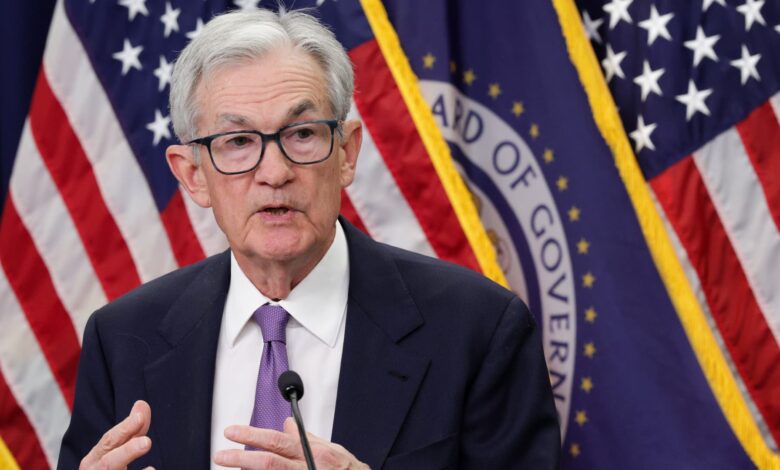
The Federal Reserve made a significant decision on Wednesday to pause its recent string of interest rate cuts, signaling a shift in its monetary policy approach. The central bank’s Federal Open Market Committee voted to maintain its key interest rate within a range of 3.5%-3.75%, halting three consecutive quarter-point reductions that were aimed at safeguarding the labor market against potential downturns.
The committee’s decision to hold the line was in line with market expectations and was accompanied by an upgraded assessment of economic growth. The statement also highlighted a stabilization in job gains and a somewhat elevated level of inflation. Importantly, the committee removed a clause that previously indicated a higher risk from a weakening labor market than from heightened inflation, signaling a more balanced approach to achieving the Fed’s dual goals of low inflation and full employment.
While the statement did not provide specific guidance on future rate adjustments, market analysts anticipate that the Fed will likely wait until at least June before making any changes to its benchmark rate. Treasury yields rose following the decision, while the S&P 500 index remained relatively stable.
Notably, there were dissenting votes from Governors Stephen Miran and Christopher Waller, who advocated for another quarter-point rate cut. Miran, in particular, has been a consistent dissenter in recent meetings, pushing for more aggressive rate cuts. Both officials were appointed by President Donald Trump, adding a political dimension to the Fed’s decision-making process.
The decision to pause rate cuts comes at a time of transition for the central bank, with Chair Jerome Powell approaching the end of his term. Powell, who has faced significant challenges during his tenure, including navigating a global pandemic and political pressures from the Trump administration, emphasized the improved economic outlook during a news conference following the decision.
The Fed’s independence has also come under scrutiny, with ongoing tensions between the central bank and the Trump administration. The Justice Department’s recent subpoena of Powell over renovations at the Fed’s headquarters and the president’s attempts to influence monetary policy have underscored the challenges facing the institution.
In terms of the economic backdrop, GDP growth has been strong, while labor market conditions remain mixed and inflation continues to be a concern. The Fed’s decision to pause rate cuts reflects a cautious approach to balancing these competing factors. Looking ahead, futures markets are pricing in at most two rate reductions in 2026 and none in 2027, with speculation mounting over who will succeed Powell as the next Fed chair.
Overall, the Fed’s decision to pause rate cuts reflects a nuanced assessment of the economic landscape and underscores the challenges facing the central bank in maintaining its dual mandate of price stability and full employment. The COVID-19 pandemic has brought about significant changes in the way we live our lives. From social distancing measures to remote work, the way we interact with the world around us has been fundamentally altered. One of the most notable changes has been the shift towards online shopping.
Online shopping has been steadily growing in popularity over the past few years, but the pandemic has accelerated this trend. With brick-and-mortar stores closing their doors and consumers looking for safer ways to shop, online shopping has become the go-to option for many people.
One of the main reasons for the surge in online shopping is the convenience it offers. With just a few clicks, consumers can browse through a wide range of products and make purchases without ever leaving the comfort of their own homes. This convenience has been especially appealing during the pandemic, when many people are wary of venturing out into public spaces.
Another factor driving the increase in online shopping is the wide variety of products available. Online retailers offer a vast selection of items, from household essentials to luxury goods, making it easy for consumers to find exactly what they’re looking for. Additionally, many online retailers offer fast shipping options, allowing consumers to receive their purchases in a timely manner.
The pandemic has also led to changes in consumer behavior, with many people opting to shop online for the first time. As a result, online retailers have seen a surge in new customers, further fueling the growth of the e-commerce industry.
Despite the many benefits of online shopping, there are also challenges that come with this shift. One of the main concerns is cybersecurity, as online shopping can leave consumers vulnerable to scams and fraud. To combat this, it’s important for consumers to shop from reputable retailers and to take steps to protect their personal information.
Overall, the COVID-19 pandemic has had a profound impact on the way we shop. Online shopping has emerged as a safe and convenient alternative to traditional retail, and it’s likely that this trend will continue even after the pandemic is over. As technology continues to advance and online retailers improve their services, the future of shopping looks increasingly digital.