Federal data reveals 1.2 million drop in immigrant workers under Trump
Labor Day is a time for Americans to come together and celebrate, but this year, the holiday takes on a different significance as the landscape of the U.S. workforce undergoes significant changes due to President Trump’s immigration policies. According to preliminary Census Bureau data analyzed by the Pew Research Center, the number of immigrant workers in the U.S. has declined by 1.2 million from January through July. This decline is attributed to the Trump administration’s focus on reducing illegal immigration and deporting those who are in the country unlawfully.
The overall number of people in the U.S. illegally peaked at an estimated 14 million in 2023, but has likely declined since then due to increased deportations and reduced protections under the current administration. This downward trend in unauthorized immigration is projected to continue through President Trump’s presidency, with net immigration falling to 500,000 annually by the end of the year and holding at that level until 2028.
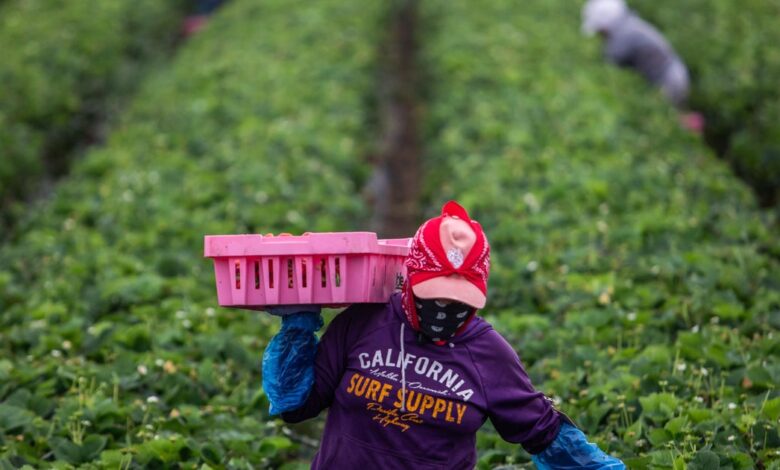
Immigrants play a crucial role in the U.S. labor force, making up almost 20% of workers. Industries such as farming, construction, and services heavily rely on immigrant workers, with immigrants constituting 45% of workers in farming, fishing, and forestry, 30% in construction, and 24% in services. The decline in immigrant workers could have implications for states and sectors that heavily depend on foreign labor.
Economists point out that immigrants, particularly those in the prime working age group of 25 to 54, help alleviate labor shortages and contribute significantly to job growth in the U.S. However, with the decline in unauthorized immigration, states with large shares of undocumented residents are starting to see reductions in migration. This could lead to labor market challenges, especially as employers are already scaling back on hiring.
The impact of immigration enforcement actions is being felt across various industries. In agriculture, farms are facing labor shortages as ICE raids disrupt operations and cause delays in harvesting. Construction sites are also experiencing a slowdown, with contractors struggling to find qualified workers due to tougher immigration enforcement. The fear of deportation looms large for many immigrant workers, affecting their livelihoods and families.
The future of the labor market remains uncertain as the immigration landscape continues to evolve. The increase in funding for immigration enforcement could lead to even higher rates of deportations, further impacting industries like healthcare, where immigrants play a significant role. As the debate around immigration policies and their effects on the workforce continues, the need for a comprehensive and sustainable approach to immigration reform becomes increasingly urgent.