Federal Reserve dot plot and economic projection June 2025
The Federal Reserve is anticipating a rise in inflation to over 3% this year, citing uncertainties surrounding President Donald Trump’s trade policies and escalating geopolitical risks. At their June meeting, the Federal Open Market Committee participants revised their forecast for the core personal consumption expenditures (PCE) price index, excluding food and energy, to increase at a rate of 3.1% in 2025, up from their previous estimate of 2.8% in March.
In April, the PCE price index stood at 2.1%, matching its lowest level since February 2021. Excluding food and energy, the core PCE was at 2.5%, which is considered a better measure of longer-term trends by Fed officials. Additionally, there was a projection of a slower economic growth rate, with GDP expected to expand by just 1.4% this year, down from the 1.7% pace forecasted in March.
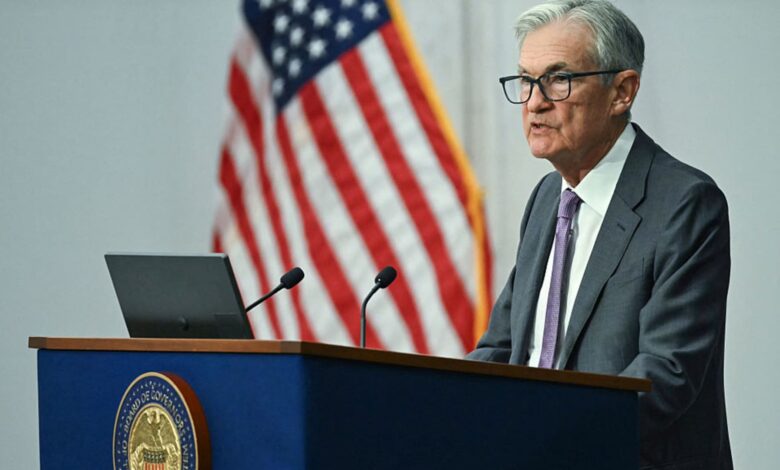
During a post-meeting press conference, Fed Chair Jerome Powell addressed the recent increase in inflation expectations, attributing it to tariffs. Powell expressed concerns that the costs of tariffs would ultimately be passed on to consumers along the supply chain, from manufacturers to retailers.
Despite the rising inflation and economic uncertainties, Fed officials have been cautious about lowering interest rates due to fears that Trump’s tariffs could reignite inflation in the near future. The ongoing conflict between Israel and Iran has added another layer of complexity to the policy outlook, as high oil prices could further complicate the Fed’s decision-making process.
However, the dot plot, which represents individual members’ expectations for interest rates, indicates that officials foresee a reduction in the benchmark lending rate to 3.9% by the end of 2025. This implies two rate cuts later this year, with seven out of 19 participants advocating for no cuts in 2025, up from four in March. Furthermore, there are fewer expected rate cuts in 2026 and 2027.
Overall, the Fed’s latest targets reflect a cautious approach to monetary policy in light of the evolving economic landscape and geopolitical risks. With inflation on the rise and economic growth slowing, the Fed faces a challenging balancing act in managing interest rates to support sustainable growth while keeping inflation in check.