Federal workers hunker down as they go without pay in shutdown: “Protect every penny”
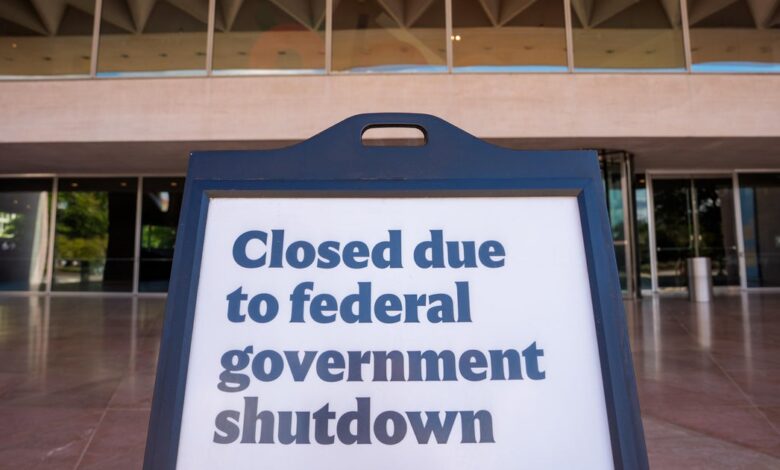
As the government shutdown continues to drag on, federal employees like Jill Hornick, Mae apGovannon, and Brooke Hardison are feeling the financial strain of working without pay. These essential workers are facing uncertainty about when their next paycheck will arrive, leading them to make tough decisions about their finances and future employment.
Jill Hornick, a service representative at a Social Security Administration field office in Illinois, has been working without pay since the shutdown began. Despite being deemed essential, she is unable to collect unemployment benefits and is struggling to make ends meet on her $75,000 annual income. Hornick has had to cut back on nonessential spending, contact her mortgage lender for deferred payments, and cancel appointments to prioritize her financial obligations.
Mae apGovannon, who works at a regional office for the U.S. Department of Veterans Affairs in Oregon, is also feeling the impact of the shutdown. He and his partner are cutting back on entertainment expenses and delaying necessary repairs to their home appliances due to the uncertainty of when they will receive their next paycheck. Despite the challenges, apGovannon remains committed to his government job but acknowledges that some colleagues may be considering leaving for more stable employment in the private sector.
Brooke Hardison, a furloughed communications director at the U.S. Department of Agriculture Food and Nutrition Service, is accruing interest on unpaid credit card bills and facing potential job instability for both herself and her husband, who works for a government contractor. The financial strain has led Hardison to consider leaving public service for the private sector, a decision she never thought she would have to make after 20 years of government employment.
As federal employees continue to work without pay, the impact of the government shutdown is being felt on a personal and professional level. The uncertainty surrounding when they will receive their next paycheck and the financial strain of working without compensation is causing many essential workers to reevaluate their future in government service. The longer the shutdown continues, the more federal employees like Jill Hornick, Mae apGovannon, and Brooke Hardison will be forced to make tough decisions about their financial stability and career path.