Fed’s Goolsbee calls for a hold on cuts as current rate of inflation is ‘not good enough’
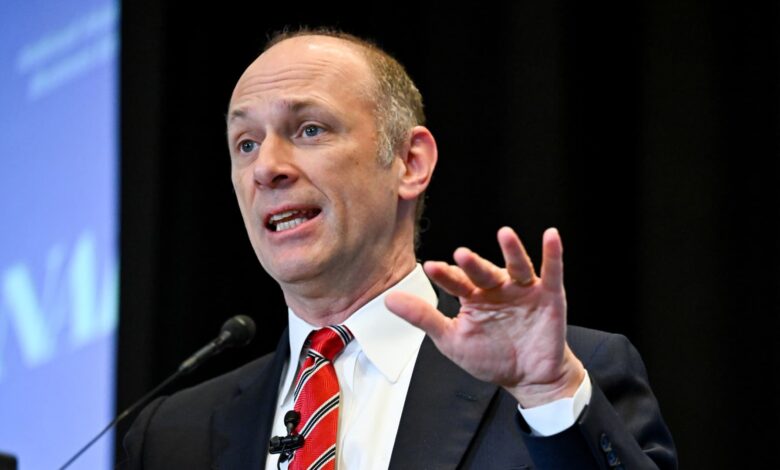
Chicago Federal Reserve President Austan Goolsbee emphasized on Tuesday that interest rate cuts should not be considered until there is concrete evidence that inflation is on a downward trajectory. Despite recent signs indicating a slight decrease in inflation from its peak, it still remains above the Federal Reserve’s target of 2%. Goolsbee cautioned against prematurely assuming that inflationary pressures are transitory, as policymakers have made this mistake in the past.
During his address at the National Association for Business Economics conference in Washington, D.C., Goolsbee highlighted the importance of not rushing into rate cuts, especially when consumers are expressing concerns about rising prices. He stressed the need to monitor inflation closely and ensure that it is moving towards the target of 2% before implementing further monetary stimulus measures.
Recent data for December revealed that core inflation, excluding volatile food and energy prices, stood at 3%, as measured by the consumption expenditures price index. This uptick was partly attributed to temporary factors like tariffs, but also reflected underlying pressures in the service sector and other areas unaffected by trade duties. Goolsbee specifically pointed out the persistent rise in housing inflation, which is not driven by tariffs, underscoring the Fed’s responsibility to remain vigilant.
While acknowledging that a 3% inflation rate falls short of the Fed’s 2% target, Goolsbee cautioned against complacency, stating that stagnating at 3% poses risks. He hinted at the possibility of rate cuts later in the year, but urged caution in the current economic environment. Markets are anticipating the Federal Open Market Committee, of which Goolsbee is a voting member, to maintain a hold on rates until at least June or July. Futures traders are pricing in a 50-50 chance of a rate cut in June and a 71% probability of a reduction in July.
In contrast, Fed Governor Christopher Waller adopted a more conservative stance at the NABE conference, suggesting that improvements in the labor market may diminish the need for further rate cuts. Waller emphasized the importance of looking beyond the temporary impacts of tariffs and focusing on broader economic indicators. He expressed skepticism about the significance of recent job market data, indicating that the January nonfarm payrolls report may not accurately reflect the true state of the labor market.
Tuesday’s lineup of Fed speakers also includes Governor Lisa Cook, who is scheduled to address the NABE conference later in the morning. The discussions surrounding interest rates and inflation are crucial as policymakers navigate the economic landscape and determine the appropriate course of action to support sustainable growth.